


Edgewood Energy LLC
Owned by Milepost Power Holdings
Operated by NAES Corp
92-MW, simple-cycle peaking facility with two GE LM6000 gas turbines located in Brentwood, NY.
Plant manager: John Lawton
Challenge. One of the site’s gas turbines triggers recent package LEL alarms. During operation, personnel also report smelling natural gas around the package. The alarming is inconsistent, but the site treats it as a credible leak indication and pursues multiple paths to identify and eliminate likely sources.
Actions taken include:
- Testing and calibrating package combustible-gas detector sensors.
- Proactively replacing combustible-gas detector sensor modules.
- Inspecting internal package gas piping, flanges, and connection points, checking for leaks, and re-tightening as needed.
- Checking connections and flanges on the final coalescer external to the package.
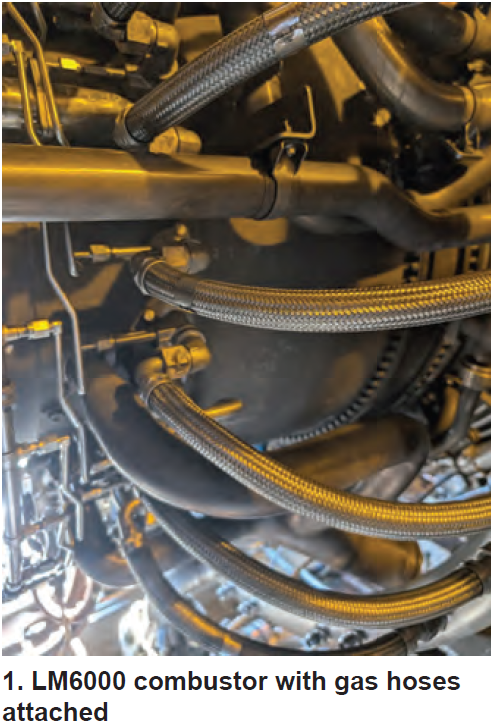
After these measures, the issue persists. The remaining gap is the set of fuel-gas hoses attached to the combustor (Fig 1), which cannot be thoroughly inspected in place.
Solution. To evaluate the hoses directly, site personnel develop a controlled removal-and-test method designed to minimize downtime and keep work manageable.
Key elements of the approach:
- Remove combustor fuel-gas hoses in groups of six at a time.
- Pressurize the removed hoses with nitrogen using a dedicated regulator and fittings suitable for nitrogen service.
- Submerge the pressurized hoses in a large tub filled with water.
- Observe for bubbles, which provide a clear visual indication of leak location.
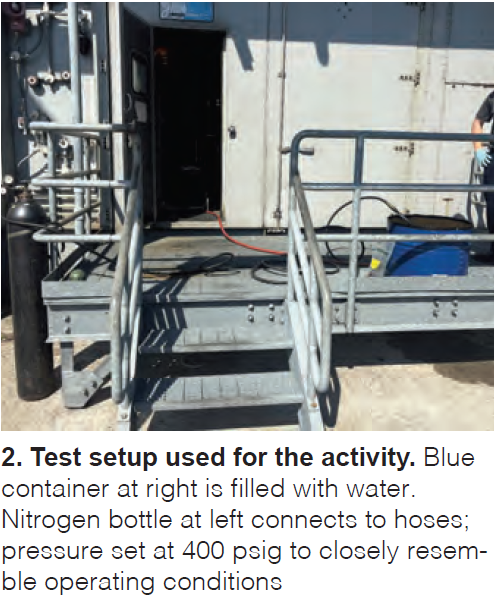 The nitrogen pressure is set to 400 psig to closely resemble operational conditions. The method is intentionally straightforward so it can be repeated periodically without specialized equipment beyond standard fittings, a nitrogen bottle and regulator, and a containment tub (Fig 2).
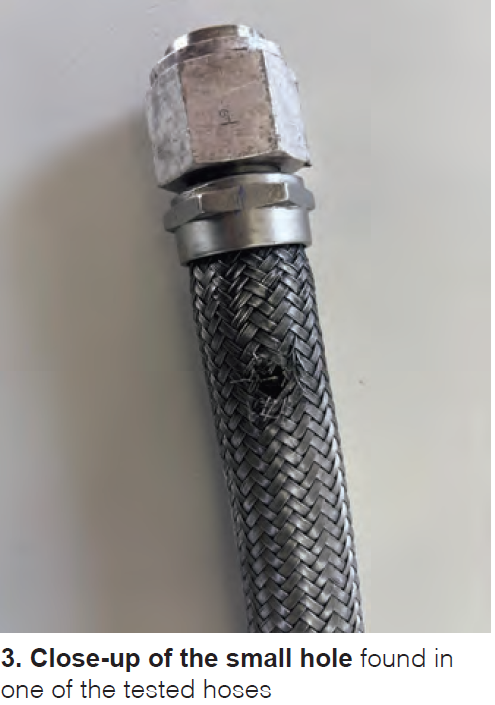
Results. The setup performs as intended. After testing several hoses, personnel identify one hose with a small hole (Fig 3). The site determines this defect is the source of the gas leak within the package. After the hose is replaced, the LEL alarms and gas odor do not recur.
With a successful root-cause identification and a proven test arrangement, the site commits to periodic fuel-gas hose testing going forward using the same materials and methodology.
Project participants: Michael Citarelli, Anthony Angieri, Joseph Cruz, and James Casey.