

A life built on reliability
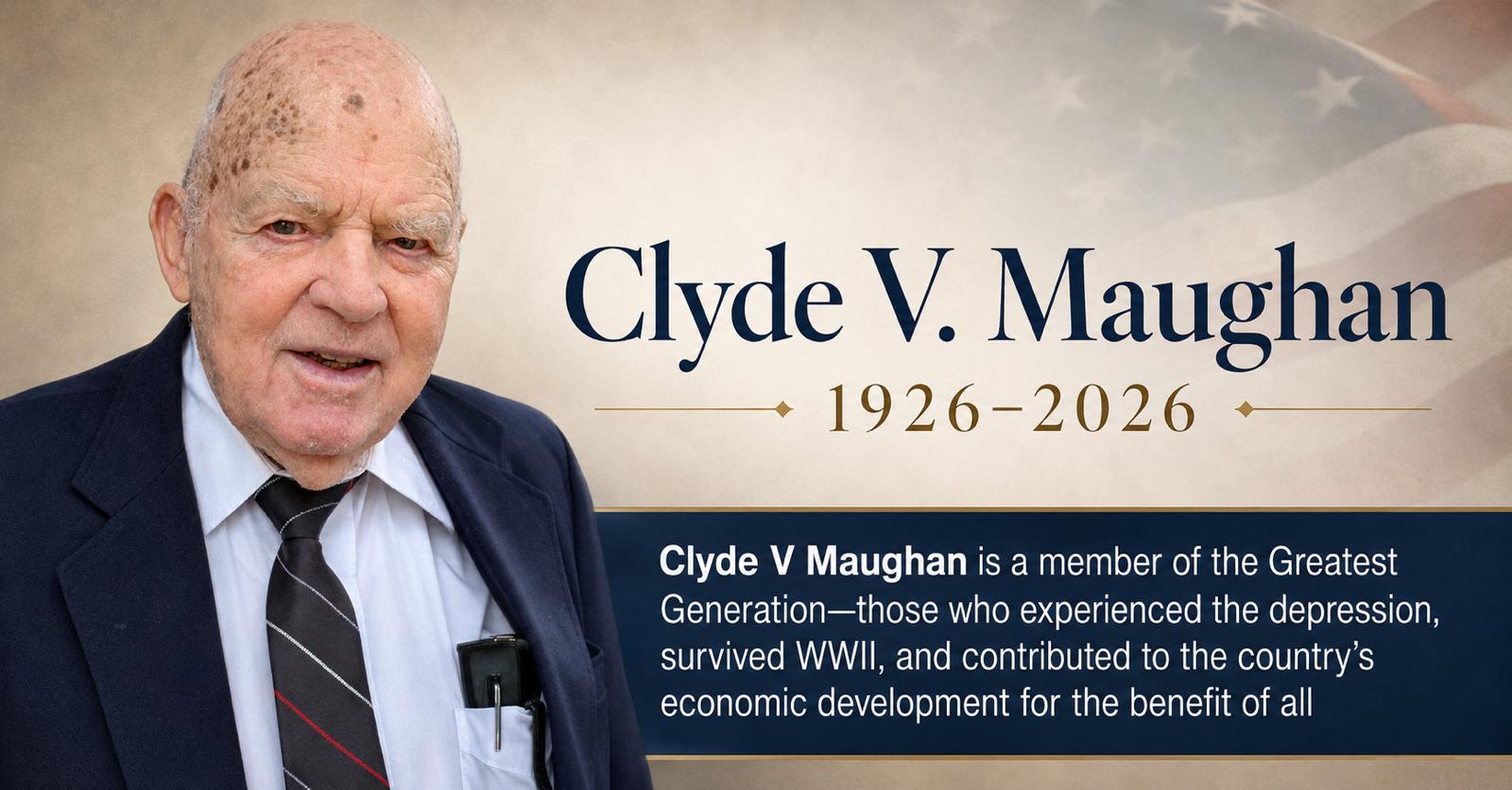
Clyde V. Maughan died Feb. 7, 2026, at age 99, leaving behind the sort of record the power industry rarely sees and never forgets. He earned a BS in electrical engineering from the University of Idaho in 1950, joined General Electric in Schenectady that same year, spent 36 years with the OEM, then spent another 36 as an independent consultant. Those numbers matter. So does the fact that after closing his consulting business at 95, he still took calls from CCJ editors when they wanted to avoid getting something wrong. Even after two strokes, he remained mentally sharp, still diligently tending a community raspberry patch and flower bed.
From an Idaho farm to a life in engineering
That childhood helps explain why Clyde’s engineering life never drifted into abstraction. Five days after his 18th birthday, a month after D-Day, he enlisted in the US Navy, trained as an aviation electrician, advanced to Aviation Electrician’s Mate 2/c, and was discharged in July 1946. He returned home carrying the weight of what the war had cost his town; of the Lava boys who turned 18 from 1938 through 1944, at least one-third were killed.
Years later, he helped organize and finance the World War II monument dedicated in Lava Hot Springs in September 2000. Between those two points came college, marriage, and the move east. He met Norma Rollins in the orchestra, he on French horn, she on alto clarinet, and they married in August 1947. In 1950, Clyde, Norma, and their young son Bruce headed east in a 1949 Plymouth.
At GE, Clyde found the work that would define him. He wrote the first version of a common generator evaluation test in 1952, a document he said remained in use decades later with only minor revision. He moved through field service in San Francisco, application engineering, manufacturing, insulation-system development, and product service, holding 11 jobs in all during his 36 years with the company. He became the first generator engineer assigned to a manufacturing group, trained service personnel to replace stator windings without factory winders, and rewound more than three dozen large generators without incident, saving the company millions of dollars. He also earned a master’s degree in mechanical engineering. Clyde said he had been fortunate to work with a few absolute geniuses. More important, he paid that luck forward.
He thought retirement would mean taking care of the farm and, in his memorable phrase, fixing toasters for little old ladies. The phone rang two months later, and the second act began. Clyde’s consulting career grew into more than 300 non-GE assignments on generators of every size and vintage. A one-year GE retainer turned into six years of work training field engineers, building a team from 24 untrained service personnel to 72 well-trained and equipped engineers, and rewriting roughly 400 pages of GE rewind instructions.
He wrote a 240-page handbook on generator maintenance, presented more than 30 seminars built around about 1500 slides to more than 1000 attendees worldwide, produced a library of technical papers, recorded seven generator-maintenance webinars with CCJ, and helped launch the Generator Users Group in 2015. He also gave many hundreds of hours of free advice by phone and email. Clyde never treated knowledge as inventory to be rationed.
When Clyde spoke, the room listened
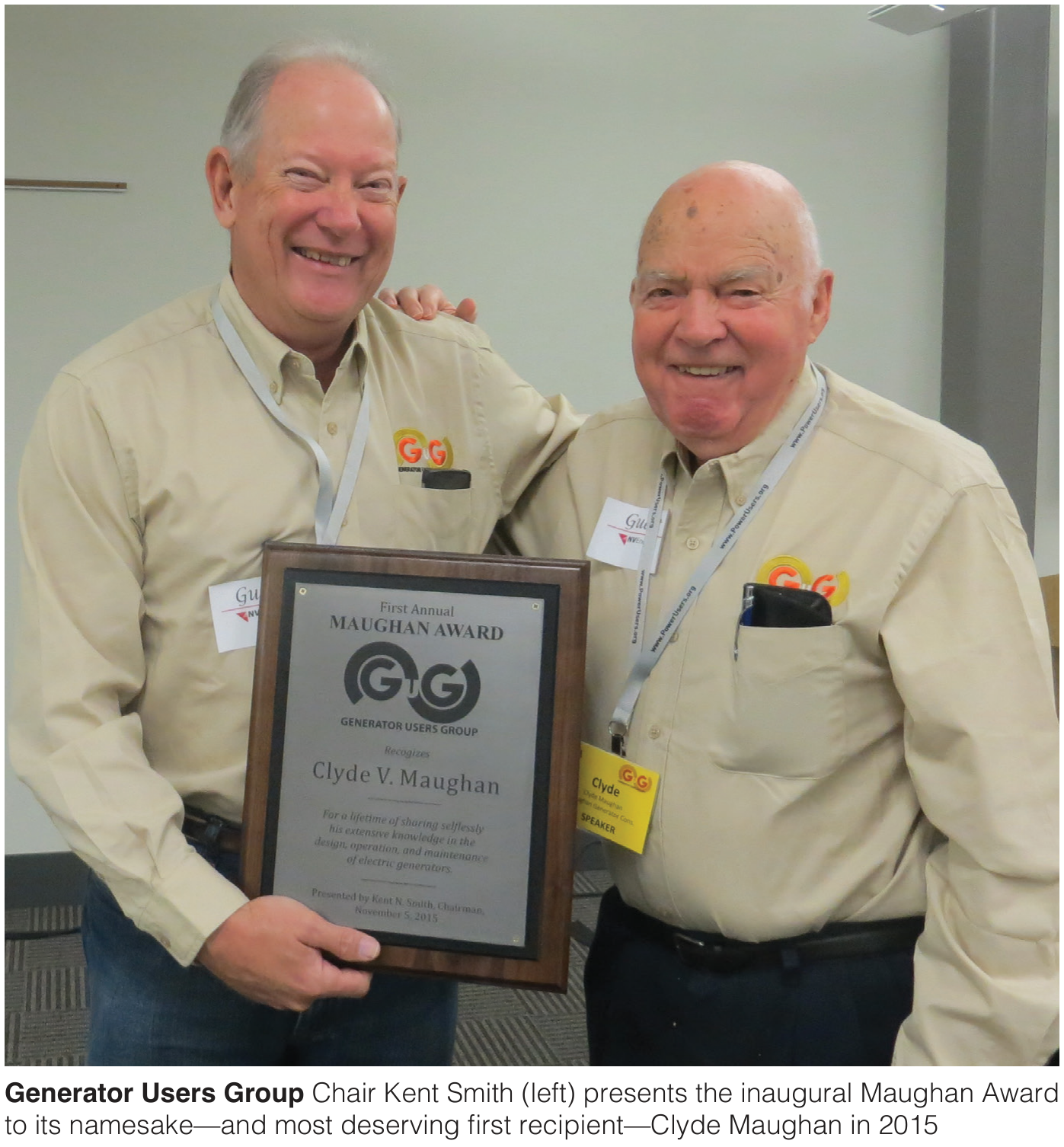
That duty changed how people behaved around him. In CCJ’s recent note on Clyde’s 99th birthday, GE Vernova executive Tom Freeman recalled the first annual Generator Users Group meeting in 2015. In a room full of seasoned engineers, Freeman watched people stand when Clyde entered, go silent when he spoke, and seek his counsel throughout the conference. Kent Smith, then the group’s chairman, recognized him for a lifetime of sharing selflessly his knowledge of generator design, operation, and maintenance.
Respect like that does not come from title alone. It comes from years of being right for the right reasons, especially when a generator failure, an outage plan, or a repair strategy is expensive enough to make everyone in the room nervous.
Clyde also left a practical model for how an expert should behave. He resisted legal work because he believed it was often a poor use of an engineering mind, and when he did accept such assignments, he told lawyers he would help find the facts, not help win the case. He was equally blunt with clients who were headed toward unnecessary work.
In one case at MIT’s fusion laboratory, after others had urged a stator-winding replacement, Clyde recommended two simple tests and, once the winding passed, said the machine should be returned to service and inspected again in 200 years. In another case, he urged a San Antonio owner to run rather than rush into a costly outage, and the unit operated for years without incident. This was not showmanship. It was judgment, grounded in experience and delivered without drama.
Knowledge was meant to be shared
The trade-off Clyde kept making, in one form or another, was between holding knowledge close and giving it away. He chose the harder and more useful path. He wrote the handbook instead of keeping his methods proprietary. He built seminars because he knew few people would learn enough by simply reading the book. He recorded webinars so owner/operators who could not afford custom training still had access to solid instruction. He even helped future competitors get started in consulting. In a field where expertise can be monetized by scarcity, Clyde chose reach.
He made a similar choice between ego and service. His autobiography is full of stories in which he challenged bad conclusions, argued with managers, or refused to shade the facts for a client. But the motive was never self-display. Clyde’s own summary of his consulting years is more revealing than any compliment. He wrote that money was not why he did the work. The work was great fun, and he would have done it for nothing beyond expenses.
That attitude explains why his influence traveled so far, from GE field crews and utility engineers to conference attendees, readers, webinar viewers, and colleagues looking for a clean answer to a difficult failure. People trusted him because he was trying to solve the problem, not enlarge himself.
Carrying Clyde’s lessons forward
The right way to remember Clyde Maughan is to use the tools he left behind and copy the habits that made those tools valuable. Read the handbook. Use the webinars. Support the Generator Users Group. Tell younger engineers what the older generation learned before it disappears. Defend facts when pressure builds to dress them up or bend them. And remember that the same discipline carried through the rest of his life.
He and Norma built a 73-year marriage, raised six children, and kept faith with the town, church, and industry that shaped them. From a farm lit by a fragile 24-V system to a 72-year career in turbine-generators, Clyde helped others do the work better. That is as strong a legacy as an engineer can leave.
Rest in peace, dear friend. You mean so much to the CCJ family. CCJ