

University Park North and South
North: 540-MW, simple-cycle peaking facility with twelve GE LM6000s.
South: 300-MW, simple-cycle peaking facility with six FT8 TwinPacs.
The plant is located in University Park, Illinois.
Owned by LS Power
Operated by IHI Power Services
Plant manager: Brandon Dupler
Background. University Park North and South use demineralized NOx water injection to reduce NOx emissions on simple-cycle peaking units. Cold-weather events in the Chicago area periodically freeze stagnant water at pipe contact points, forcing the plant to hold units out of service to remain in compliance. The site implemented a low-cost modification and an operator-driven procedure, using instrument air to clear NOx water lines when temperatures drop below freezing.
NOx water injection uses demineralized water injected into the combustor with natural gas to reduce firing temperature and lower NOx emissions. At University Park, NOx is described as the plant’s most restrictive permitting constraint because of its role as an ozone precursor at ground level.
Because the facility operates as a peaker, water can sit in small-bore runs and low points between dispatch events. That operating profile increases exposure to freezing, especially at support and hanger contact points where cold can migrate into the line during wind-driven events.
Challenge. Both University Park North and South insulated and heat traced the NOx water piping. Even after insulation and heat-trace updates, the site continues to experience freeze-ups during severe wind and low temperature conditions.
The team identified a repeatable failure mechanism: At approximately minus 14F, cold migrates from the steel support structure through the pipe hanger and freezes the water at contact points when there is no water flow. When operators attempt a start at those temperatures, the result is either no NOx water flow or reduced flow, which prevents compliance with emissions limits and can block unit operation.
Operationally, this creates two compounding risks:
- Forced outages and delayed starts during cold snaps when dispatch value is high.
- Compliance exposure because the units cannot legally operate without NOx water injection available.
Solution. University Park adopted a simple, economical approach: tie the plant air system into the NOx water system so operators can clear the line when temperatures warrant.
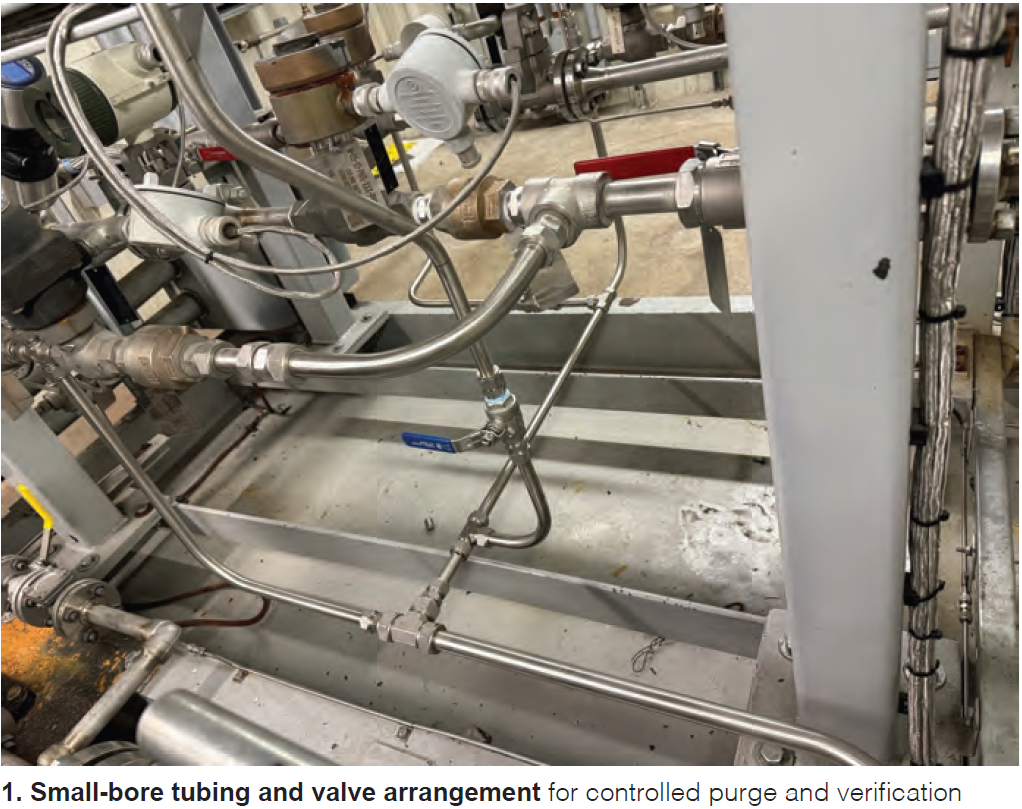
The site incorporated temperature triggers into operator rounds. When conditions are below freezing, operators momentarily open the air line to blow water out of the NOx water piping (Fig 1). After verifying the line is cleared, operators isolate the air supply so the unit remains ready for the next start. The same evolution is performed after shutdowns when ambient conditions indicate a freeze risk.
Key implementation details include:
- A clear, repeatable valve lineup so the blowdown evolution is consistent across shifts.
- Isolation capability so the air tie-in is secured after the line is cleared.
- A verification step confirming water has been removed before returning the system to standby.
Results. The modification is now installed on the site’s LM6000 engines and on the FT8-3 units.
During the 2023–2024 winter, the plant experienced multiple forced outages and start-up issues attributed to frozen NOx water lines. In the following winter season, after the air tie-in and procedure are implemented, the team reports zero start failures or NOx-water issues caused by frozen lines.