

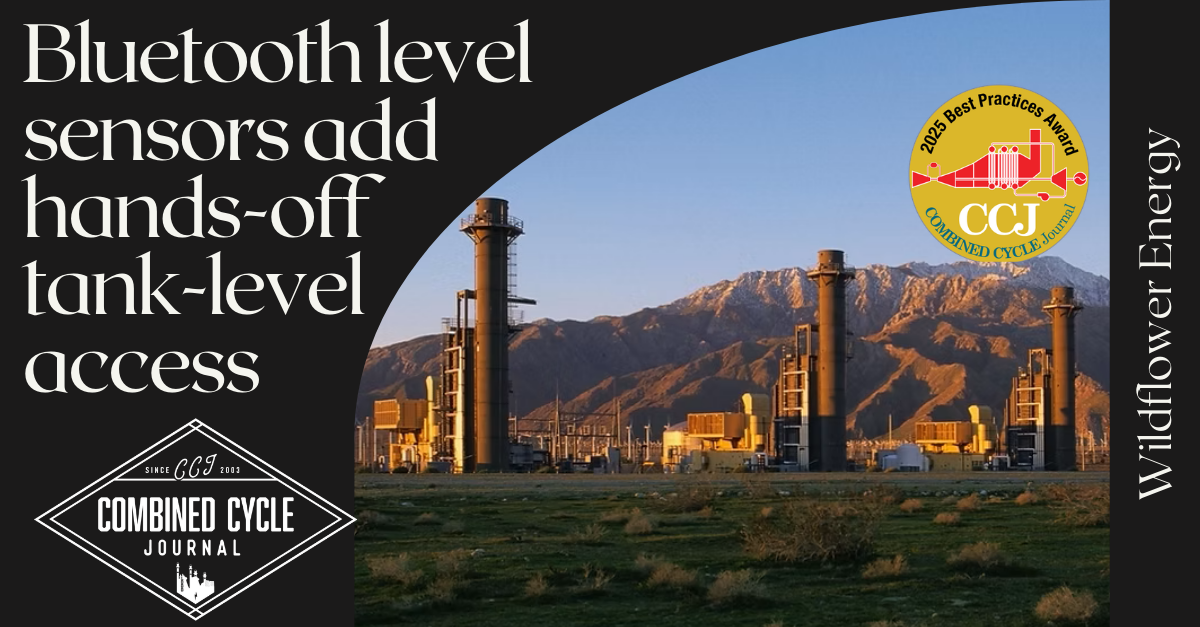
Wildflower Energy LP
Owned by Diamond Generating Corp
Operated by DGC Operations
Indigo Generation: 136-MW simple-cycle peaking plant in North Palm Springs, Calif, with three GE LM6000 PC Enhanced Sprint gas turbines.
Larkspur Energy: 98-MW simple-cycle peaking plant in Otay Mesa, Calif, with two GE LM6000 PC Sprint gas turbines.
Plant manager: Mike Carpenter
Background. Site personnel routinely verify levels on several storage tanks supporting plant operations. The existing level indications were approaching end-of-life, and the previous instrument platform had limited support and parts availability. Rather than replacing like-for-like, the team used the instrument refresh to improve both maintainability and field safety.
Challenge. Traditional level-instrument checks and adjustments often require a technician to reach the transmitter or local display mounted on the vessel. That can mean:
- Ladder or manlift access
- Fall protection requirements
- More time per task, especially when verifying multiple tanks during rounds or work planning
The team wanted a replacement that maintained measurement accuracy while reducing the exposure associated with elevated access.
Solution. Indigo selected Endress+Hauser Micropilot FMR60B radar level transmitters to replace the aging instruments (Fig 1). The application conditions include minimal turbulence and no internal obstructions, which supports reliable non-contact radar measurement performance for tank level.
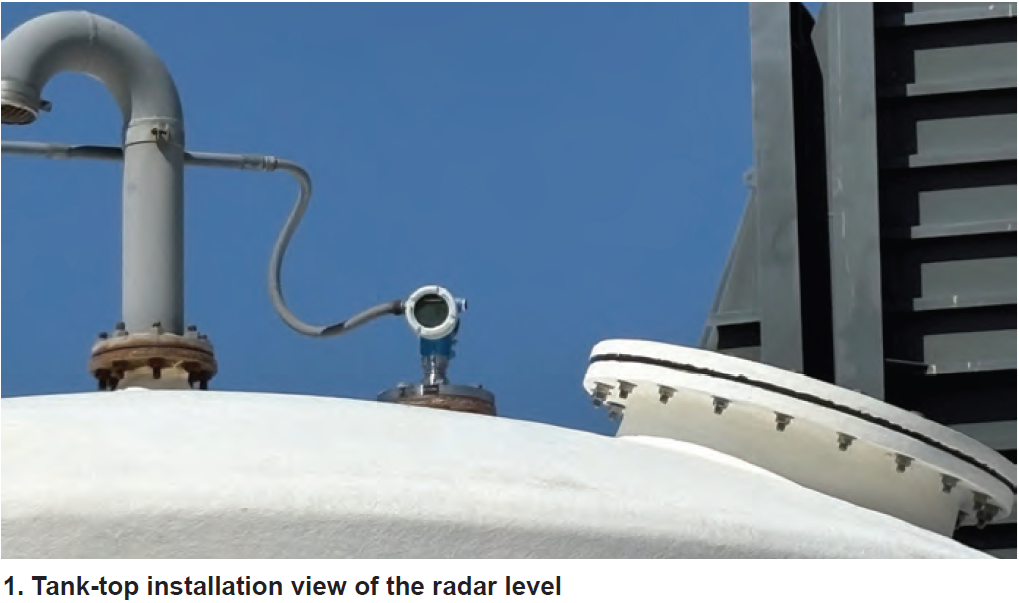 The differentiator for the site was not only updated radar technology, but also the ability to connect to the device via Bluetooth using a mobile app. Once installed and powered, technicians can access key configuration and diagnostic functions from the ground, including setup, reading values, and calibration checks, without physically attaching to the instrument at elevation.
An external display is also available. This enables level readings to be viewed from a more accessible location, improving visibility during rounds and reducing the need to position personnel near the top of the tank.
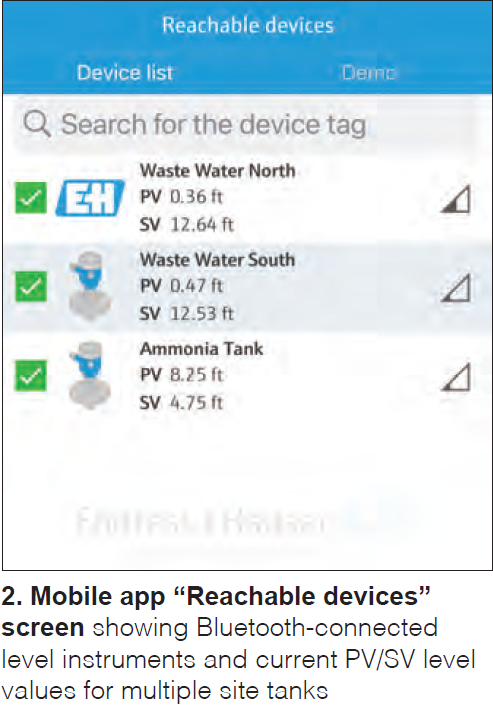
A mobile interface shows multiple tanks listed as reachable devices, with level values displayed in feet for each tag (Fig 2). A local Endress+Hauser RIA15 indicator displays level in feet. The transmitter installed on a tank-top connection, with a short cable run from the sensor head.
Results. The site describes the task of taking readings or checking levels as “literally hands-off,” because technicians can perform routine verification and many configuration steps without a ladder, manlift, or fall harness. The benefits reported are primarily in maintainability and safety:
- Fewer elevated-access tasks for routine checks and troubleshooting
- Simplified calibration and verification using mobile connectivity
- Improved accessibility of level information when an external display is installed
While the submittal does not quantify labor-hours saved, the change targets a recurring activity, tank-level verification, where even small per-task reductions can compound over time, especially across multiple tanks and frequent rounds.
Project participants:
Mike Carpenter, plant manager
Mike Noll, O&M manager
Mike Mathews, IC&E lead technician
Compact ladders improve safety, access
Challenge. Wildflower personnel continually look for safer ways to perform critical tasks, and this improvement demonstrated how a simple change could strengthen an onsite safety program.
Accessing the ladders to the turbine and generator platforms presented a recurring slip-and-fall risk, particularly when employees had oil residue on their boots or when rain made ladder rungs wet and slippery. The risk increased further during maintenance activities when personnel were carrying tools or equipment and could not maintain full contact while climbing.
In addition, lines routed near the base of the ladders created another hazard during ingress and egress. Personnel could inadvertently step on those lines, increasing the risk of line damage or slipping on wet piping.
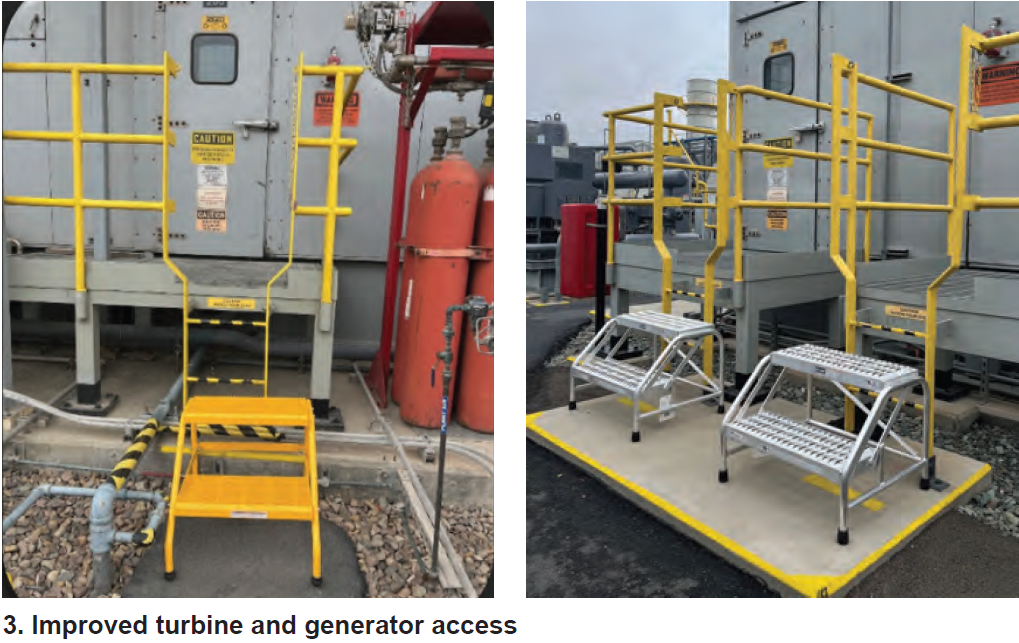
Solution. The site installed small aluminum two-step ladders at the base of the ladders leading to the turbine and generator platforms (Fig 3). This modification improved access by providing a more stable transition point and helping personnel maintain three points of contact while climbing, even when one hand was occupied with tools or equipment. The solution was simple, low-cost, and easy to implement, while addressing a frequent onsite safety concern.
Results. Adding the small aluminum two-step ladders provided a safer approach for accessing the platform ladders.
The flat, serrated step surface offers better footing and grip than standard ladder rungs, reducing slip risk during wet or oily conditions. The step ladders also reduce the likelihood of stepping on lines or piping near the ladder base during entry and exit. Overall, the modification improves personnel safety during routine access and maintenance activities.
Project participants:
Mike Carpenter, plant manager
Mike Noll, O&M manager
All site personnel