

Milton B Lee Peakers
CPS Energy
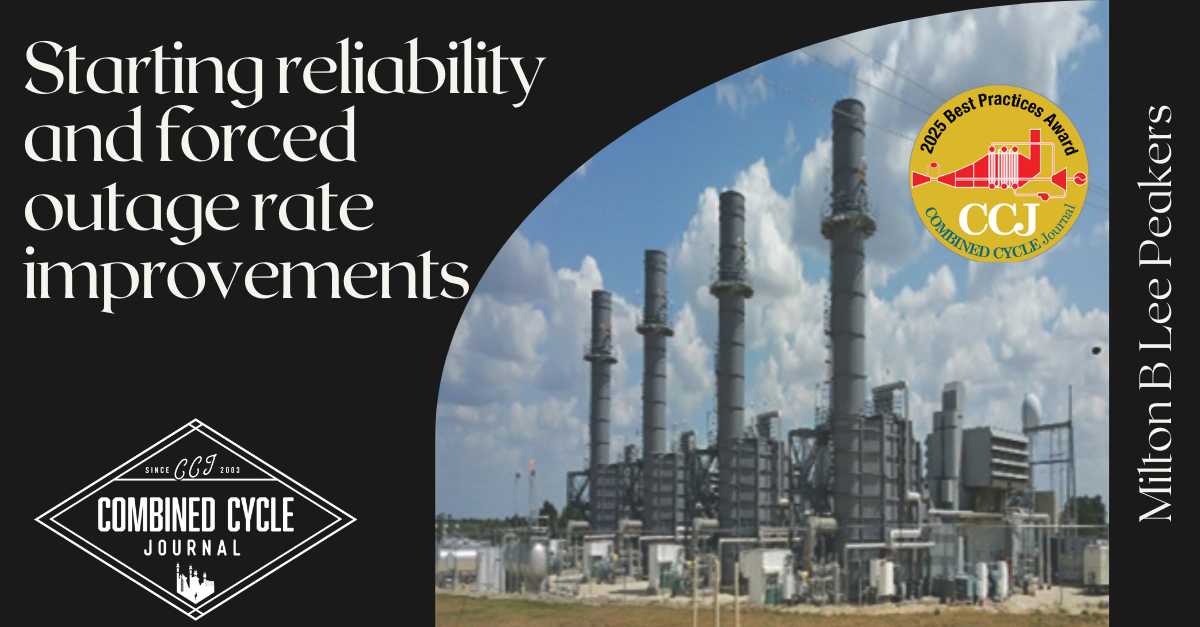
376-MW simple cycle peaking facility powered by eight LM6000PC gas turbines located in San Antonio, Tex.
Plant manager: Ryan McDonnell
Challenge. Following an extended period of subpar performance, the owner partnered in 2017 with the gas-turbine OEM and an engineering firm to evaluate reliability across the eight LM6000PC peaking units and identify improvement opportunities. The objective was to restore expected reliability and improve unit readiness for peak-season dispatch.
Solution. Rather than a single equipment fix, CPS Energy underwent a “best practices rebuild” across maintenance fundamentals, parts readiness, organizational capability, and execution discipline. The program focuses on eliminating repeat causes of start failures and reducing the duration and impact of forced outages.
The team identified gaps in the existing PM strategy, particularly for critical equipment that lacked adequate inspection or tasking. New PM plans are implemented to improve early detection and reduce the probability of functional failures that typically surface as start issues on peaking units.
Improve spare parts readiness. The plants create new storeroom stock items for critical parts. The intent is to shorten restoration time when failures occur and to reduce both the frequency and duration of outage events linked to parts availability.
Add dedicated technical support capability. CPS Energy adjusts the staffing structure by hiring dedicated technical support staff to drive reliability best practices for the LM6000 fleet. The submission credits this group with improving troubleshooting effectiveness, developing longer-term maintenance plans, and strengthening asset life-management practices.
Institutionalize root-cause analysis. The plants perform root-cause analyses (RCA) on failures affecting the LM6000 units. CPS Energy reports that RCA findings lead directly to new PM plans and to refurbishing or replacing aging equipment that contributed to repeat events.
Upgrade or refurbish aging equipment. Outdated equipment is upgraded or refurbished as part of the recovery plan. In parallel, OEM recommendations are reevaluated, and CPS Energy reports a decision to replace some critical equipment on a time basis instead of run hours to reduce the probability of age-related failures.
Improve outage planning and execution. Outage management practices are enhanced to maximize efficiency. CPS Energy notes that while outage frequency remains consistent, outage duration declines significantly by focusing on critical items and addressing multiple issues during the same outage window.
Build targeted training. The program adds strategic staff training curricula to improve technical knowledge for problematic plant systems. The dedicated technical staff receives specialized LM6000 training, which CPS Energy says strengthens troubleshooting capability and overall site expertise.
Results. Plant staff significant improvement since the 2017 study, attributing the change to revamping best practices, shifting to a proactive stance, and adding dedicated personnel. Reported outcomes include:
- 100% starting reliability achieved
- Marked improvement in EFOR relative to the pre-study period
- Reduced outage duration, driven by improved planning, focus on critical items, and bundling corrective work
- Lower impact from parts-related delays, supported by stocking critical spares
Proactive replacement of certain critical items based on time, combined with RCA-driven PM improvements, reduces unexpected failures and supports higher availability during critical seasons.
Project participants: Paolo Solorzano, Kyle Yeh, Gabriel Golden, Brian Stahl, Jody Nottingham, Gabriel Cisneros, and Mark Rodriguez.