
 A great many combined cycle plants were built in the nineties and early 2000s. Not so long ago, many considered them to be reaching their end of life. But the recent power plant construction boom has convinced many asset owners to keep these units running. Some are upgrading them to ensure they last another twenty years.
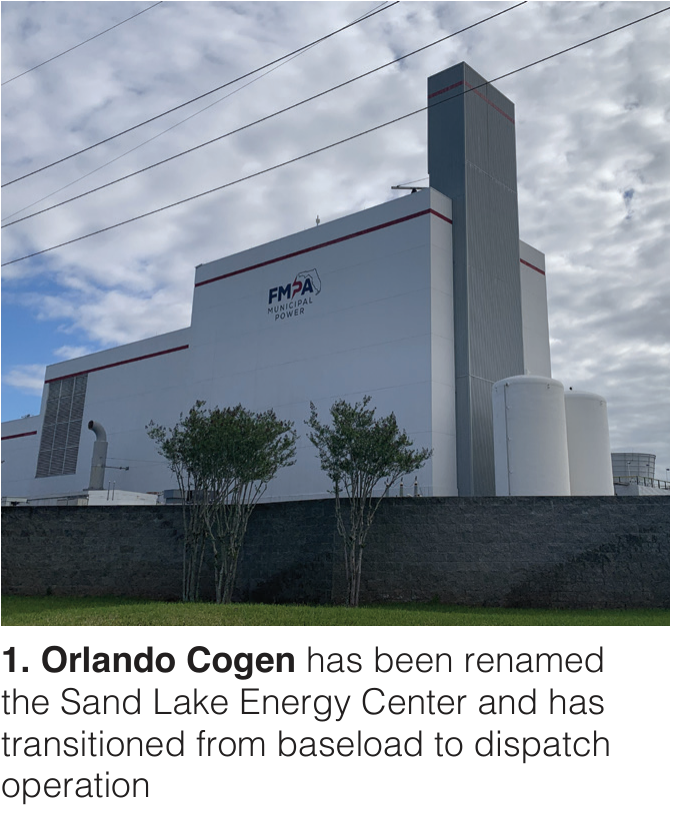
Take the case of the Sand Lake Energy Center (SLEC) in Orlando, Florida. Built in 1993 and originally a cogeneration plant, its new owner Florida Municipal Power Agency (FMPA) is investing in the facility with the view to achieving another two decades of service.
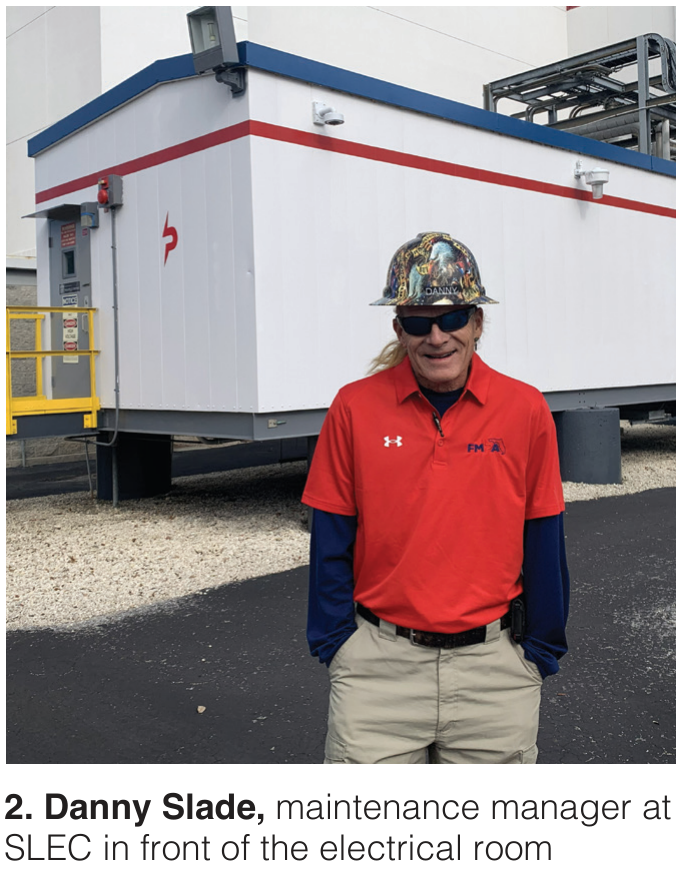
“We have switched from running 8,000 hours per year to where we will now have fewer hours but more starts,” said Danny Slade, Maintenance Manager, Sand Lake Energy Center. “We are engaged in several improvement projects including gas turbine hot gas path (HGP) upgrades, improved grid connectivity, and perhaps the installation of duct burners.”
Ownership changes
SLEC began life in 1993 as Orlando Cogen (OCL). The original owner was Air Products, who sited it adjacent to one of its air separation plants. The Air Products facility purchased cold water from a 1,600-ton absorption chiller at OCL that used at least 5% of the plant’s thermal output. In 2001, Air Products sold the plant. It has changed hands several times since. The cogeneration agreement continued until 2024 when FMPA acquired it. At that point, the chillers were decommissioned.
SLEC comprises an ABB 11N1 gas turbine (later Alstom and then GE) configured in a single-shaft arrangement with an ABB VAX steam turbine and a water cooled 144 Brush MVA generator. The combined cycle unit is rated 125 MW at 22°C and 60% relative humidity. Power sales contracts with Florida utilities covered 114.5 MW of base-load output, and deliveries of extra power at peak times as available. The original cogeneration plant supplied 15 t/h of steam at 1.4 bar to an absorption chiller located onsite to chill cooling water for Air Products.
The 11N1 heavy-duty gas turbine was introduced in the early 1990s, specifically designed for high-efficiency, reliable peaking power, and cogeneration applications. It featured a silo combustor, corrosion-resistant blades, and a water-cooled, cold-end generator drive. It uses a single large silo-type combustion chamber located on top of the machine known for fuel flexibility. OCL was one of the first installations in the world of this turbine.
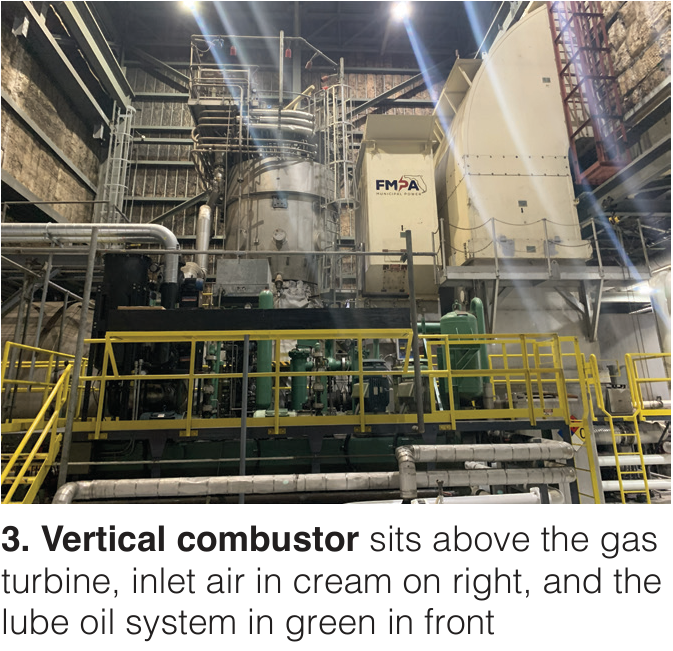
In 2005, OCL upgraded the gas turbine to the Alstom GT11NM, which enhanced power output and reduced CO emissions. It involved new turbine blades and vanes, heat shield segments, vane carrier, and exhaust gas housing. The upgrade improved efficiency and power output by up to 10% without any increase in fuel usage or emissions while reducing lifecycle costs.
Although the GT11N and GT11NM are no longer manufactured, this was a popular machine in its day. By the end of 2005, Alstom reported that the fleet had exceeded one million Equivalent Operating Hours (EOH) and had an average reliability of 98.9% and availability of 96.0% over a six-year period.
In 2008, Alstom released the NMC version, which consisted of a compressor upgrade and a new rotor. OCL adopted this version. It remains in use to this day at the renamed SLEC. Gas is delivered to the plant from the pipeline at 800 PSI, decompressed to 400 PSIG and heated to 300°F prior to combustion.
Why single shaft?
OCL was the first application of the ABB 11N1 gas turbine in a single-shaft configuration, which rapidly became the preferred combined cycle configuration. A single-shaft arrangement meant less electrical equipment and a smaller footprint.
“Having one generator instead of two eliminates a major component and associated high voltage electrical auxiliaries,” said Slade. “As well as big capital cost savings when the plant was built, it saves space, improves efficiency, lowers savings and gives extra potential power revenue.”
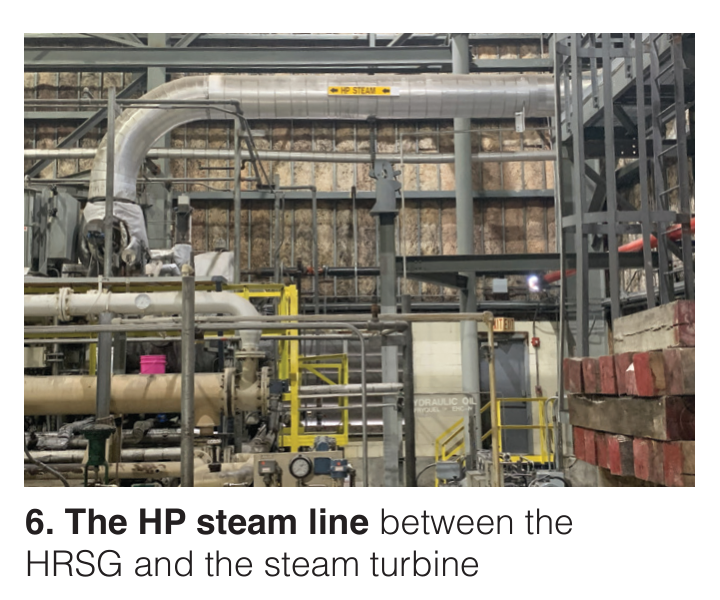
The ABB HRSG is a dual-pressure unit with finned tube construction throughout. Its design allowed for future installation of an SCR in the event emissions limits were lowered. However, no SCR was ever installed or required.
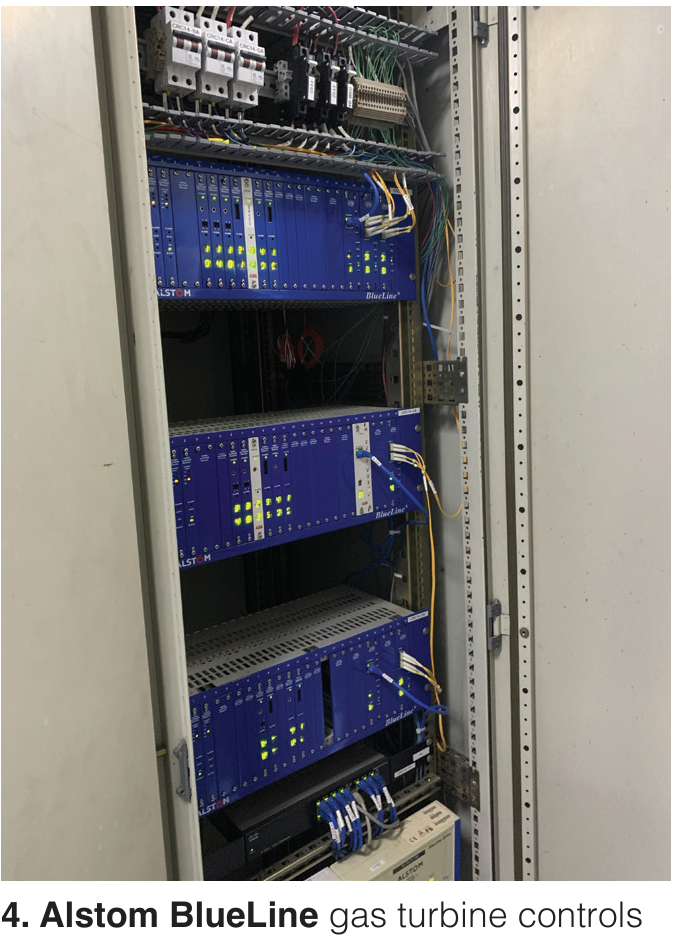
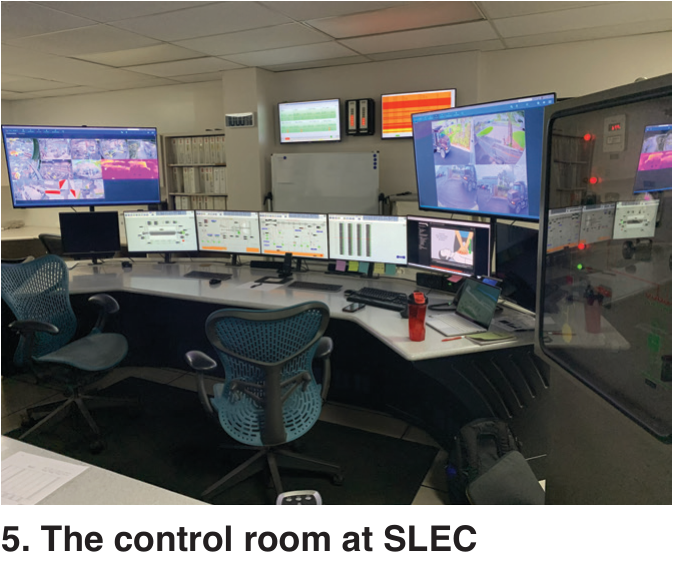
The original plant control system hardware in 1993 was provided by ABB, a Taylor MOD 300 microprocessor-based distributed control system (DCS). The gas turbine control system was ABB’s Egatrol 300 which communicated directly with the DCS. A full controls upgrade to Alstom BlueLine technology in 2012 included new gas turbine controls, balance of plant (BOP) BlueLine controls in 2014, and steam turbine BlueLine controls in 2017.
The ABB Stal steam turbine (now owned by Siemens Energy) was manufactured in Finnspong Sweden. It is the VAX type, structured with a dual casing with high speed and low speed modules connected via speed reduction gears. It is rated at 40 MW. It has a high-speed, high-pressure (10,062 RPM HP turbine) section connected via a gearbox to a 3,600 RPM low pressure (LP) section. Boiler feed water pumps are each sized for 100% duty and are horizontally split casing design with interstage take off to supply the LP steam turbine. The LP shaft connects to the generator via an SSS Clutch.
“Although Orlando Cogen was not the first single shaft combined cycle plant with an SSS Clutch in the USA, it was the first large plant over 100 MW,” said Dave Haldeman of SSS Clutch. “Since then, there have been many more installations, some up to 400 MW.”
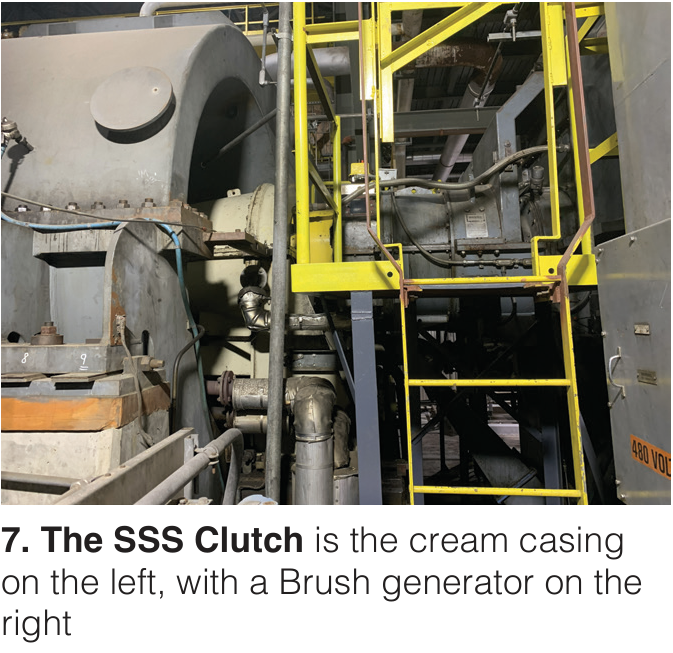
The clutch operates between the exciter end of the generator and the LP section of the steam turbine. It enables the gas turbine to start independently of the steam turbine. It can accommodate large axial movements if necessary. It features high overspeed and overload capacity.
“Air Products specified that a disconnect clutch be included to decouple the steam turbine operation from that of the gas turbine,” said Slade. “With the clutch, a steam turbine trip does not necessitate a gas turbine trip, and the gas turbine can rapidly provide power while the steam turbine is being readied for operation.
Maintenance actions
As of the end of Q1/25, the SLEC plant had accumulated around 240,000 EOH and more than 600 starts over the course of its 31-year lifespan. Slade was involved in the construction of the facility and has been in charge of maintenance ever since.
“The first real problem was damage to some turbine blades, which were replaced in 1995,” he said. “Hot gas path parts are now replaced every three years.”
Constant care and attention are needed to keep a plant like this running well. In 2000, there was an HGP casing repair. In 2004, the main 144 kV generator step up (GSU) transformer failed and was replaced with two GE Prolec transformers. The following year, the HP steam turbine rotor had to be replaced and the plant upgraded from the 11N1 gas turbine to the 11NM version.
In 2008, some HRSG inner liner repairs and replacements were done as well as the move to the 11NMC version (compressor upgrade and rotor replacement). The higher air flow from the NMC required GT casing modifications. As part of the upgrade package, new variable inlet guide veins were included as well as aerodynamically enhanced exit guide vanes. These were integrated into the control software.
The next major event took place in 2011 when a hard engagement of the clutch took place.
“During a plant restart after a scheduled outage, an unusual steam turbine trip subjected the clutch to an unusually high relative acceleration rate at engagement,” said Haldeman. “The results were damaged pawls that prevented the relay clutch from engaging.”
Slade contacted SSS Clutch who flew immediately to the site. Together with OCL crew, they repaired the clutch and got it back into service. Utilizing parts from a relay clutch component, the damaged unit was rebuilt on site. That “temporary” clutch remained in service until 2017. OCL decided to replace it as a precaution.
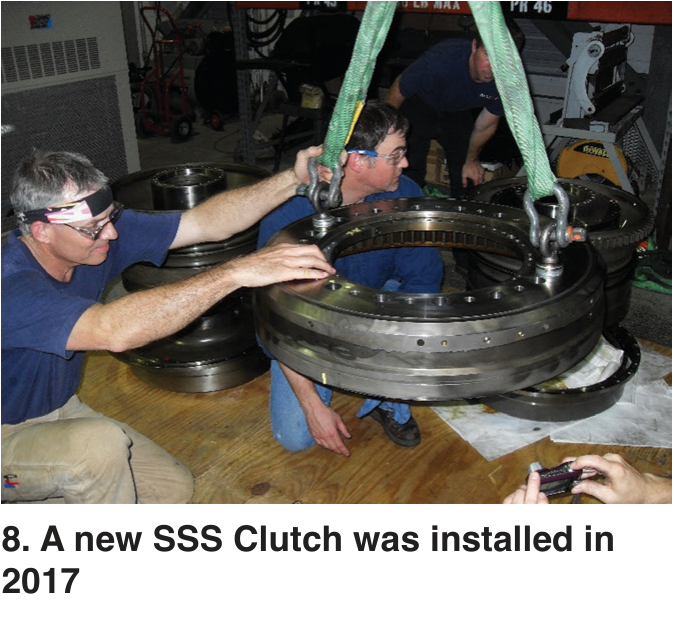
“That hastily repaired clutch from 2011 ran for six more years before we replaced it,” said Slade. “When it was shipped back to SSS Clutch, inspection revealed it to still be working perfectly.”
Many use a clutch to switch from power generation mode to providing ancillary services such as spinning reserve or synchronous condensing. This is not the case at SLEC. Its purpose is to enable a faster start up. Without the clutch, it would take 45 minutes or more for the plant to produce power. By disconnecting the steam turbine, the gas turbine can be started independently to provide 10 MW within 20 minutes. The GTs power output steadily ramps up from that point and the steam is gotten to the right heat and pressure to run the steam turbine.
“We can do a hot restart to full power in 45 minutes thanks to the clutch,” said Slade. “Otherwise, it would take us about three hours from a cold start to achieve full load.”
FMPA takes over
Florida Municipal Power Agency took over OCL in 2024, signaling the end of the plant’s cogen and baseload era. FMPA is a wholesale power agency owned by 33 municipal electric utilities throughout Florida. It operates a pool of generation resources stretching from Chattahoochee and Bloutstown on the Florida panhandle to Homestead to the south of Miani. Its goal is to provide low-cost, reliable power to more than three million Florida residents.
FMPA announced the purchase of OCL and two other central Florida power plants in summer of 2023. The Mulberry Energy Center (formerly Mulberry Cogeneration Facility) will supply 115 MW and the Bartow Energy Center (formerly known as Orange Cogeneration), will supply 104 MW.
“With this acquisition, we had an opportunity to secure three highly functioning Florida-based power plants for our generation fleet at a time when electricity demand began rising faster than expected with continued population growth and manufacturing resurgence,” said Jacob Williams, FMPA general manager and CEO.
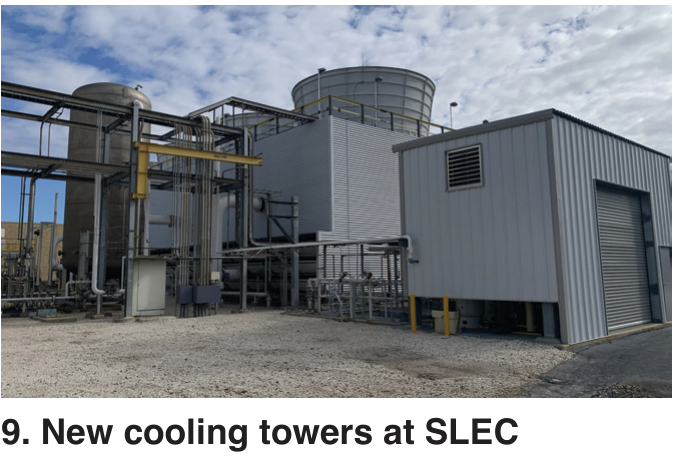
FMPA took over OCL in 2024, renamed it Sand Lake Energy Center and placed it into its power pool. During most of its life, the facility has been in long-term power purchase contracts, the most recent of which ended in December 2023. FMPA immediately shifted its mode of operation to standby dispatch. That led to the removal of the chiller system. FMPA then looked at what was needed to ensure reliable operation into the future. It engaged ICT Industrial to replace the aging cooling towers in 2025 with a four-cell cooling tower replaced with a fiber reinforced polymer design. ICT completed one cell initially and then added the other three cells at the end of 2025.
OCL had duct burners as part of its original design. However, the completion of the 11NMC upgrade in 2008 increased mass flow into the compressor by up to 10% which provided the added power previously available from the duct burners. If the facility had tried to turn on the duct burners, it would raise the heat rate from 8,000 Btu to 8,800 Btu, which would have meant burning more fuel and higher emissions.
“We didn’t need the duct burners to meet our power contracts so we hadn’t used them since 2008 and they were taken out in early 2025,” said Slade.
That decision is being reconsidered. Duct burners may be reintroduced to gain more MW for those times the plant is on dispatch duty as every MW counts. Slade estimated that new burners could add 4 to 6 MW. If the price of power is high enough, the higher heat rate and extra fuel burned wouldn’t be a concern.
GT upgrade
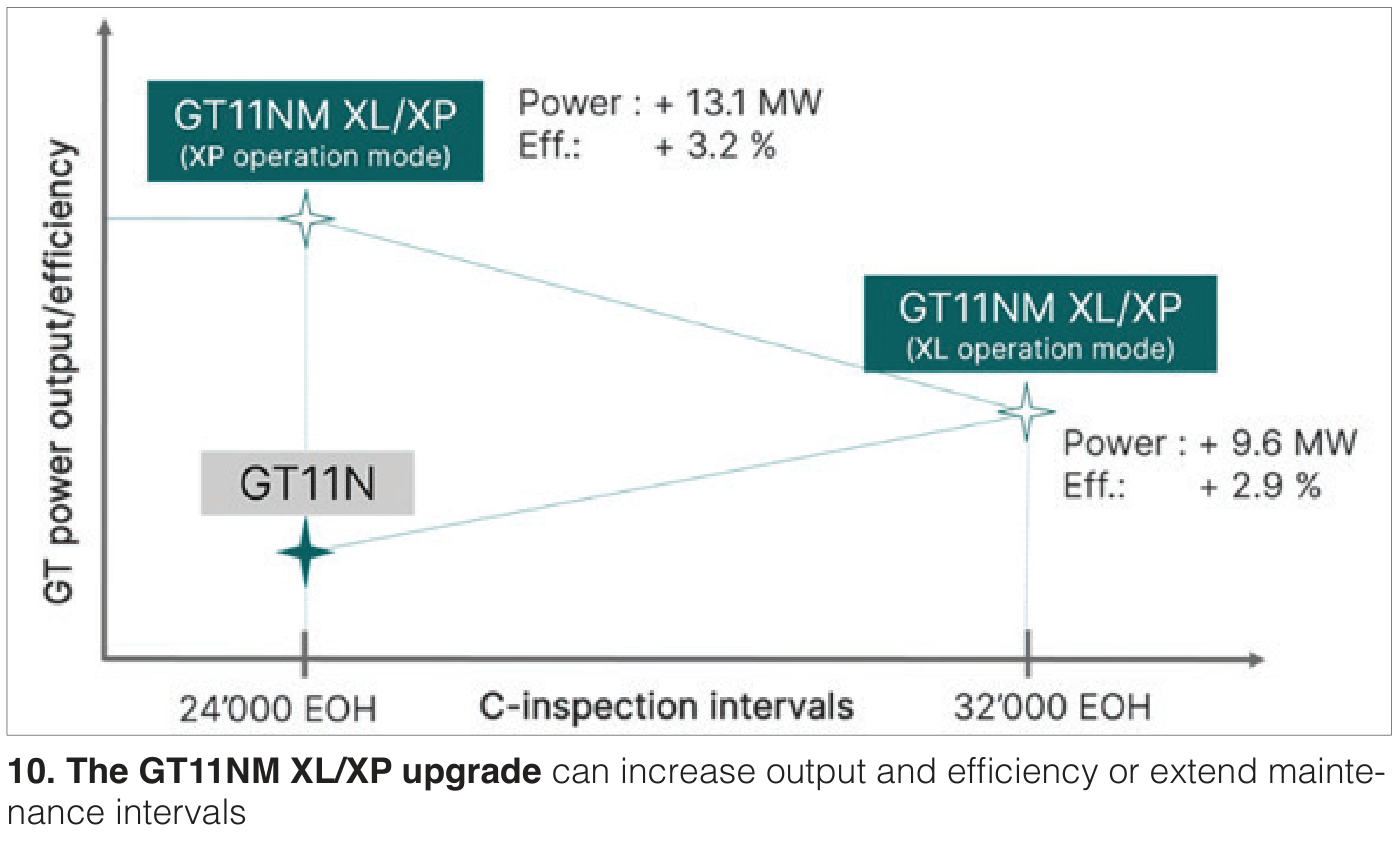
FMPA is in the process of upgrading the 11NM gas turbine. The GT11NM XL/XP upgrade takes major inspection intervals from 24,000 to 32,000 EOH in the XL operation mode, improves output by 9.6 MW and efficiency by 2.9%. Alternatively, the XP operation mode keeps the maintenance internal at 24,000 EOH but boosts output by 13.1 MW and efficiency by 3.2%.
This XLXP package entails new hardware on row 4 of the compressor, cooling improvements, and upgraded controls. Hughes Technical Services will be installing the upgrade package during the next major scheduled outage.
“We have switched from running 8,000 hours per year to where we will now have fewer hours but more starts,” said Slade. “The XL/XP upgrade and the addition of duct burners will enable us to provide far more MW whenever we are called upon to operate.”
Finally, FMPA is considering an electrical improvement. Slade estimated that perhaps 8 to 10 MW of output can be lost due to inefficiency at the transformer, substation, and on transmission lines. The proposal is to upgrade from the current two aging transformers to one larger transformer and restring the substation connections to Duke Energy. Such improvements are aimed at having the facility last up to twenty more years.
New operating mode
It is quite a change to go from baseload for thirty years to dispatch only. Slade said that in the first two months of 2026, the facility ran for only six days. This is due to it being part of a much larger power pool. FMPA has many plants to call upon. Prices and demand differ across the network. Those who own the transmission lines take their own cut, too. And plants operate at different efficiencies.
Newer turbines with higher efficiency, for example, may be cheaper to run than an older combined cycle facility like SLEC. Those operating the power pool utilize multiple factors to determine which plants operate and when.
“The FMPA pool has a balancing authority and a great many assets at its disposal,” said Slade. “Some might be offline due to an outage, so they utilize all the units in the pool in the most economical way.”
Lessons learned
With more than 30 years at the helm, Slade has learned a thing or two about maintenance. Due to ongoing demands for power, he suggested plants consider immediate ways to provide more capacity.
“There is so much demand that you can’t buy a new GT for up to five years, yet there is a growing need for energy,” said Slade. “Upgrade packages and other ways to get more capacity out of your assets have become important.”
Slade also expressed concern about the impact of the shift in operating mode. He isn’t sure how the equipment will react to sudden starts for short periods and then not operating for a few weeks in between. Time will tell, he added, how the economics work out between operating the facility for limited hours versus the cost of starting it up and shutting it down over and over.
He also passed on some suggestions to power plant owners – organize the plant configuration so that maintenance actions can be accomplished easily and speedily. For example, the removal of a rotor a few years ago required dismantling and moving large and heavy components.
“Make sure there is enough room to work on as easy access is key,” said Slade.
As he is operating a discontinued turbine, finding spare parts is a growing problem. He attends the Alstom Owners Group (AOG) every summer. It is an organization of legacy Alstom equipment owners of GT8, GT11N, N1, N2, GT13, GT24, and GT26 machines. The AOG collectively shares information and cooperates amongst members to identify and address solutions to common issues, concerns, and shortfalls associated with legacy Alstom equipment.
“We all help each other with obsolete parts and there are some companies that manufacture re-engineered blades and buckets,” said Slade. “But in another ten or 15 years, it is likely to be challenging to find parts for a 50-year-old turbine.” CCJ