















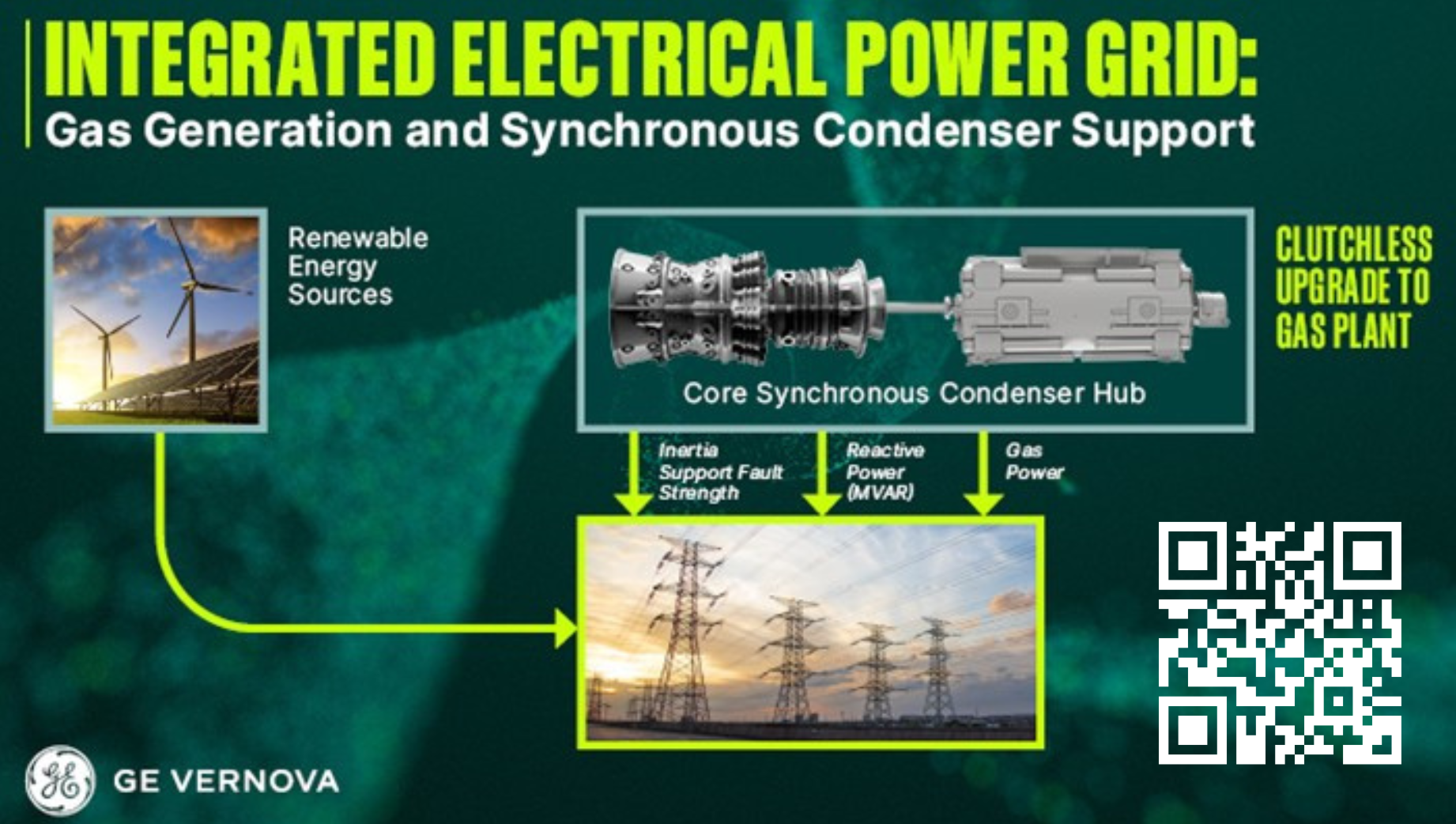
GE Vernova (GEV) has installed and validated a clutchless synchronous condenser solution for its 7F.05 gas turbine, enabling transition between power generation and synchronous condensing modes in minutes. This solution expands asset flexibility and grid support capability and may be applicable to other heavy-duty fleets, including E-, F-, and H-class units, following successful validation.
As power systems add more renewable and inverter-based generation, traditional sources of inertia, voltage support, and system strength are declining. GEV’s synchronous condenser solutions help address this by converting proven gas turbine assets into flexible, future-ready grid stabilizers that can support the energy transition and provide long-term value. What makes this approach unique is how it builds on existing, well‑understood technology.
Rather than introducing entirely new equipment, GEV offers aero derivative gas turbine solutions with synchronous condenser capability that repurpose proven generators to provide essential grid services—often without fuel consumption or major plant modifications. This helps operators to meet modern grid requirements while making better use of assets they already trust.
With decades of experience in rotating machines, controls, and grid integration, GEV offers a comprehensive synchronous condenser portfolio engineered to maintain grid stability while enabling higher levels of renewable energy. These solutions are already supporting power systems across North America and Australia and are gaining traction in the Middle East and parts of Europe. By improving reliability, resiliency, and power quality, they help grids accommodate more inverter‑based resources without sacrificing performance.
At its core, a synchronous condenser is a generator operating without producing real power. When the gas turbine is not needed for power production, it remains physically connected, but operates unfired, while the generator continues to stay synchronized to the grid. In this mode, the equipment provides system stability and grid support by supplying reactive power and inertia to help maintain voltage and frequency.
This capability highlights the continued relevance of rotating machines in modern, renewable‑heavy power systems.
7F.05 synchronous condenser upgrade builds on this principle, offering essential grid support while being capable of integrating seamlessly into both new and existing power plants. More details on the 7F.05 synchronous condenser solutions will be shared at the 7F Users Group Conference, May 18–21, 2026, at the Woodlands Waterway Marriott.
Two flexible paths to synchronous condensing. To meet diverse needs, GEV offers two complementary synchronous condenser configurations for the 7F.05 platform, supporting both new installations and existing plant upgrades.
Synchronous condensing built in
For new 7F.05 installations, GEV offers a clutched synchronous condenser configuration that integrates grid support capability directly into the initial plant configuration. This purpose‑engineered solution expands the generator’s role beyond energy production. When active power is not required, the unit can operate in synchronous condensing mode to provide reactive power and inertia without consuming fuel. By incorporating proven clutch and generator technology into the powertrain, the solution preserves the fast‑start capability, fitting into peaking and baseload plants. It also supports Black Start functionality, and operational flexibility associated with the 7F.05 platform, resulting in a future‑ready plant with a streamlined commissioning and operating experience.
Unlocking more value from existing assets
For existing 7F.05 units, the clutchless synchronous condenser upgrade does not require a clutch or major mechanical redesign. It uses the existing unit configuration to provide additional grid support and can be implemented during a planned outage. This offers a practical and cost‑effective way to use existing assets during non‑dispatch periods.
This upgrade enables voltage regulation, dynamic reactive power, and fault current while providing significant inertia—up to 5.3 times more than the generator alone when compared to clutch‑based configurations. This transition between generation and synchronous condenser modes happens in minutes, rather than hours, and can supply up to 225 MVAR of reactive power. This capability allows plant owners to respond quickly to grid needs during non-dispatch periods. This solution has been successfully piloted by a GEV customer, accumulating more than 500+ hours of synchronous mode operation, demonstrating both its practicality and reliability. CCJ