

 The annual meeting of the Australasian Boilers and HRSG Users Group (ABHUG) was held in Brisbane, Australia, November 25-27 2025. Conference and workshop participants joined from Australia, Austria, Germany, New Zealand, the UK and US.
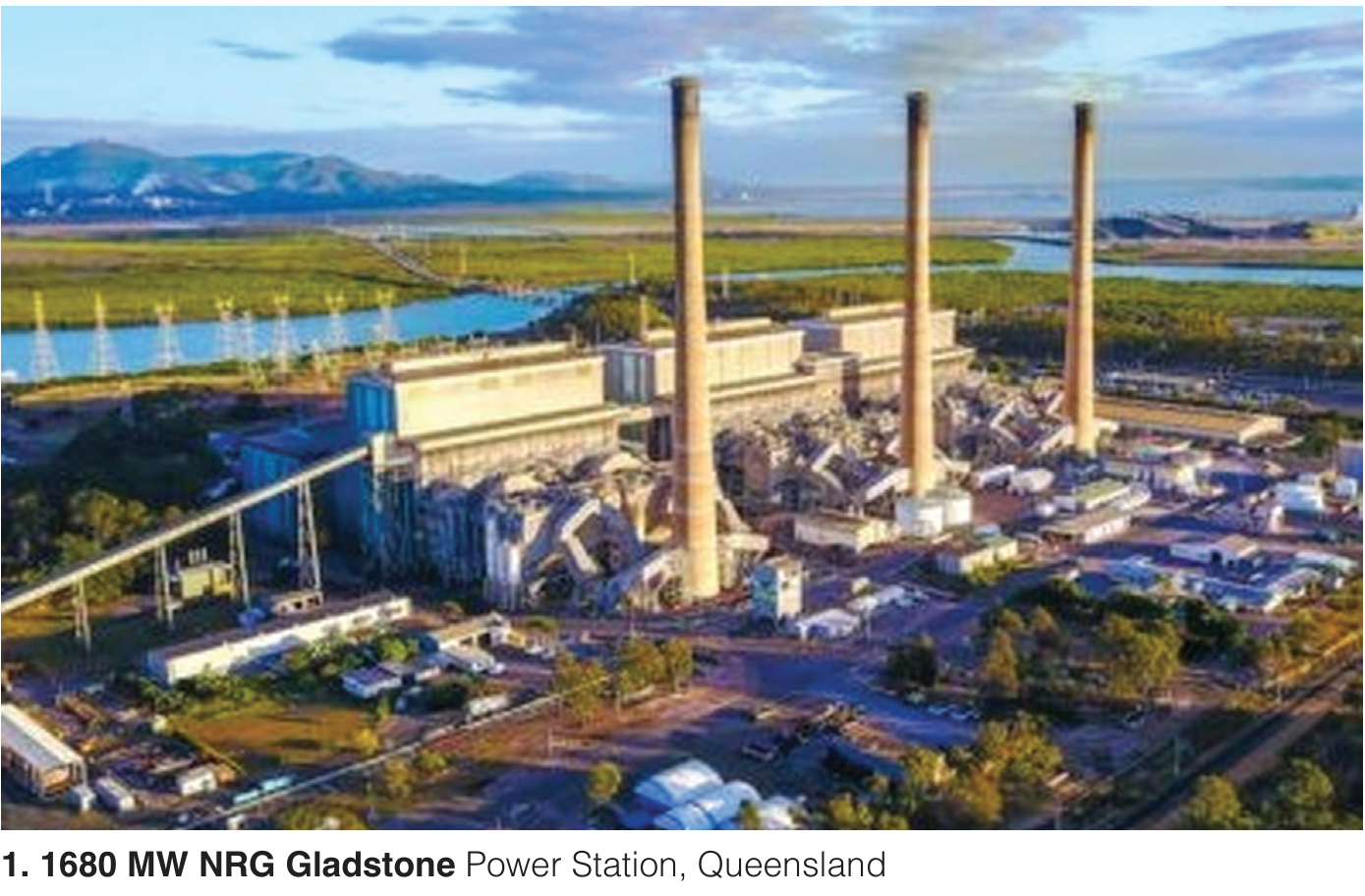
One ABHUG feature is inclusion of traditional fossil-fueled power plants (Fig 1) and issues common to both traditional and combined-cycle installations.
 The opening fundamentals
Sessions opened with Bob Anderson’s 16 years of HRSG thermal transient assessment results providing statistics from detailed investigations at 76 plants worldwide, to determine the most common causes of thermal transients and the actions to eliminate them, covering equipment from 24 HRSG OEMs, 5 gas turbine OEMs, and 11 steam turbine OEMs.
A few key observations: Most causes of HRSG tube failures identified as early as 2009 remain active, and although the industry knows how to avoid these failures, many plants are not applying this knowledge. Most frequently, the failures are associated with low-cycle thermal fatigue occurring during startup and shutdown. If a failure occurs, noted Anderson, “Owners should remove the failure site for metallurgical analysis and conduct root cause analysis to avoid repeated failures.” Only eight percent of plants surveyed had a tube failure root cause program in place in 2025.
For attemperators, annual inspections are needed for heavy cycling units, and only 21 percent of plants routinely inspect this hardware. Eighty-six percent of plants experience leaking spray water and 93 percent use master control/martyr block valve sequencing logic that encourages leaking. Anderson stressed that “master block/martyr control logic can prevent the leaking.”
Other practices that increase the risk of failures showed that 39 percent experience attemperator overspray conditions, 29 percent allow operators to manually control attemperators, only 35 percent effectively drain the high-pressure superheater, and only 41 percent effectively drain the reheater during startup.
International updates were also provided, by Barry Dooley, on the cycle chemistry aspects influencing the availability of fossil and combined cycle/HRSG plants. The statistics from detailed assessments at close to 300 plants worldwide indicate that failure to accurately monitor corrosion products is the primary influence (at 85 to 92 percent of plants), closely followed by inadequate instrumentation (80 percent), challenging the status quo (70 to 80 percent), and deposits in waterwalls and HP evaporators (80 percent).
In a follow-up to the chemistry statistics, discussions provided detailed information on sampling, monitoring, analyzing corrosion products, and protecting the steam turbine phase transition zone from corrosion. Said Dooley, “Here the new IAPWS Decay Map provides the first indicator to validate whether the plant’s chemistry is optimized and offers a tool to quantify any benefits from an application of a film-forming substance.” Dooley continued, “With the growth of renewable energy forcing conventional and combined-cycle plants into more and more flexible operation, the benefits from understanding and then controlling the factors leading to corrosion product transport will be very significant.”
Selected conventional plant highlights
One feature of the ABHUG conference is increased coverage of conventional plant experience as it relates to basic plant operation including gas turbine combined cycles. A number of these plants were discussed including the following:
AGL Loy Yang A. Jason Cruikshank, AGL Australia, discussed the Installation of P91 replacement attemperators (Fig 2) at the 2200 MW Loy Yang A Power Station that features four large lignite-fired tower boilers. Loy Yang generates approximately 30 percent of Victoria’s power requirements and was commissioned between 1984 and 1988.
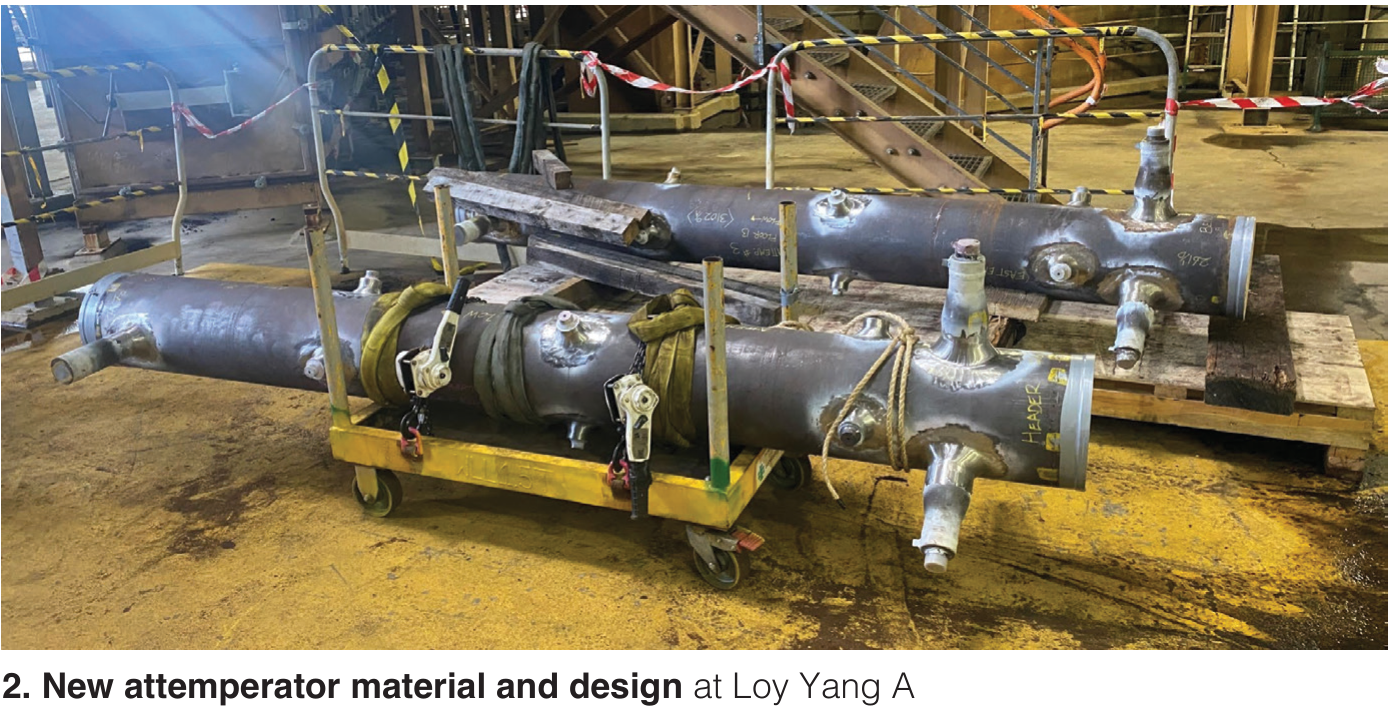
Cruikshank covered historical problems and solutions, replacement superheater and reheater attemperator design, material and welding considerations, and installation details.
Each unit has four primary superheater attemperators, four secondary superheater attemperators, and four reheater attemperators. Spray flow cycling had become a major issue, depending on boiler fouling levels (among other issues). Resultant temperature cycling led to significant thermal stresses.
Steinmuller offered AGL a design and materials solution using P91 to deal with high thermal stresses, along with spray water line design changes. Material pressure part welding requirements and post-weld heat treatment were covered in detail.
NRG Gladstone. (See Fig 1) Reuben Smith, with NRG’s coal-fired Gladstone Power Station in Queensland, discussed the station’s six 280 MW steam turbines first commissioned in 1976. His focus: Reduction of synchronous vibration in HP/IP turbine assembly through hot straightening and re-machining (Fig 3).
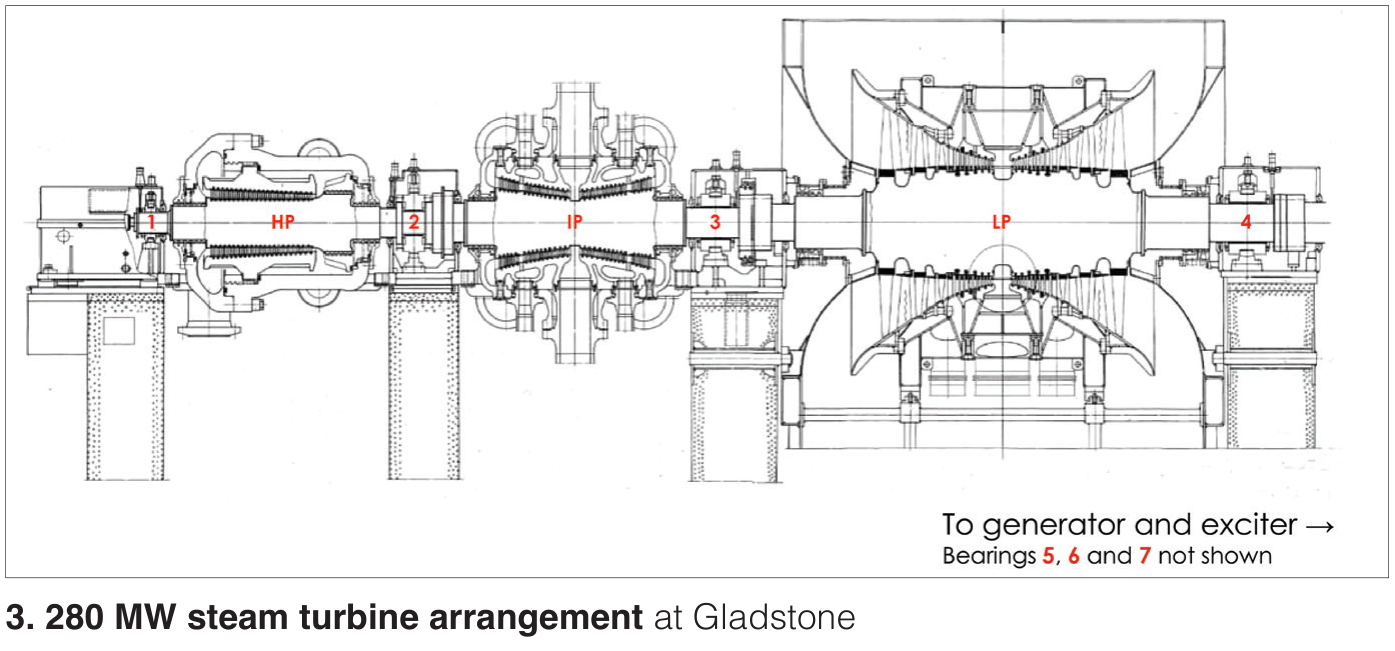
In early 2010, vibration amplitude measured at the front of one unit revealed an upward series of sharp, permanent step changes. Neither the operating regime nor steam conditions had changed, and attempts to realign and balance the machine proved futile.
Smith covered vibration analysis in all zones. Temperature measurements showed a vertical, top-to-bottom thermal gradient after shutdown. These stresses produced an internal bending moment of the rotor, leading to a permanent bow. Smith explained that “Adding weights to correct a bow will do nothing to address the vibration response that arises from a bent rotor,” and he followed with a detailed review of why.
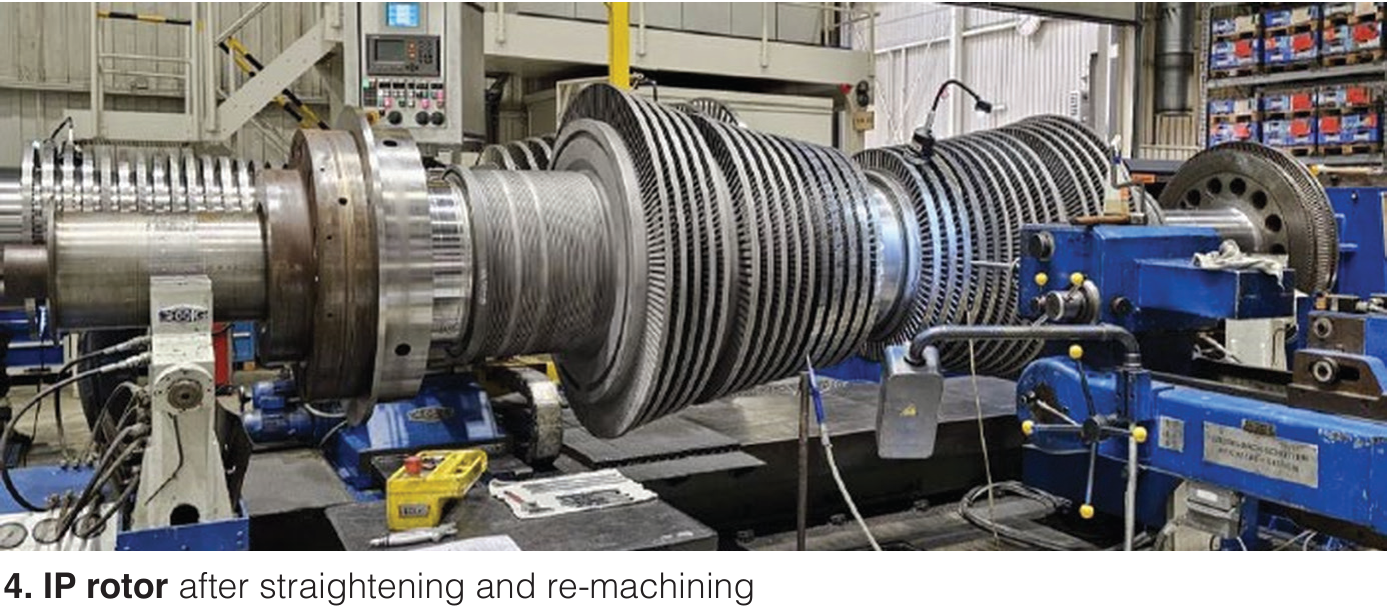
After new rotors were installed, the original rotors were sent to Germany for re-machining and hot straightening (Fig 4). He covered these processes in detail.
The declared “loss of availability” on Unit 1 was reduced from 140 MW to 0 MW.
Callide B. Gerrie Visser, CS Energy, discussed Last stage blade cracking at the Callide B station in Queensland (Fig 5). Callide B features two Hitachi 350 MW steam turbines commissioned in 1998.
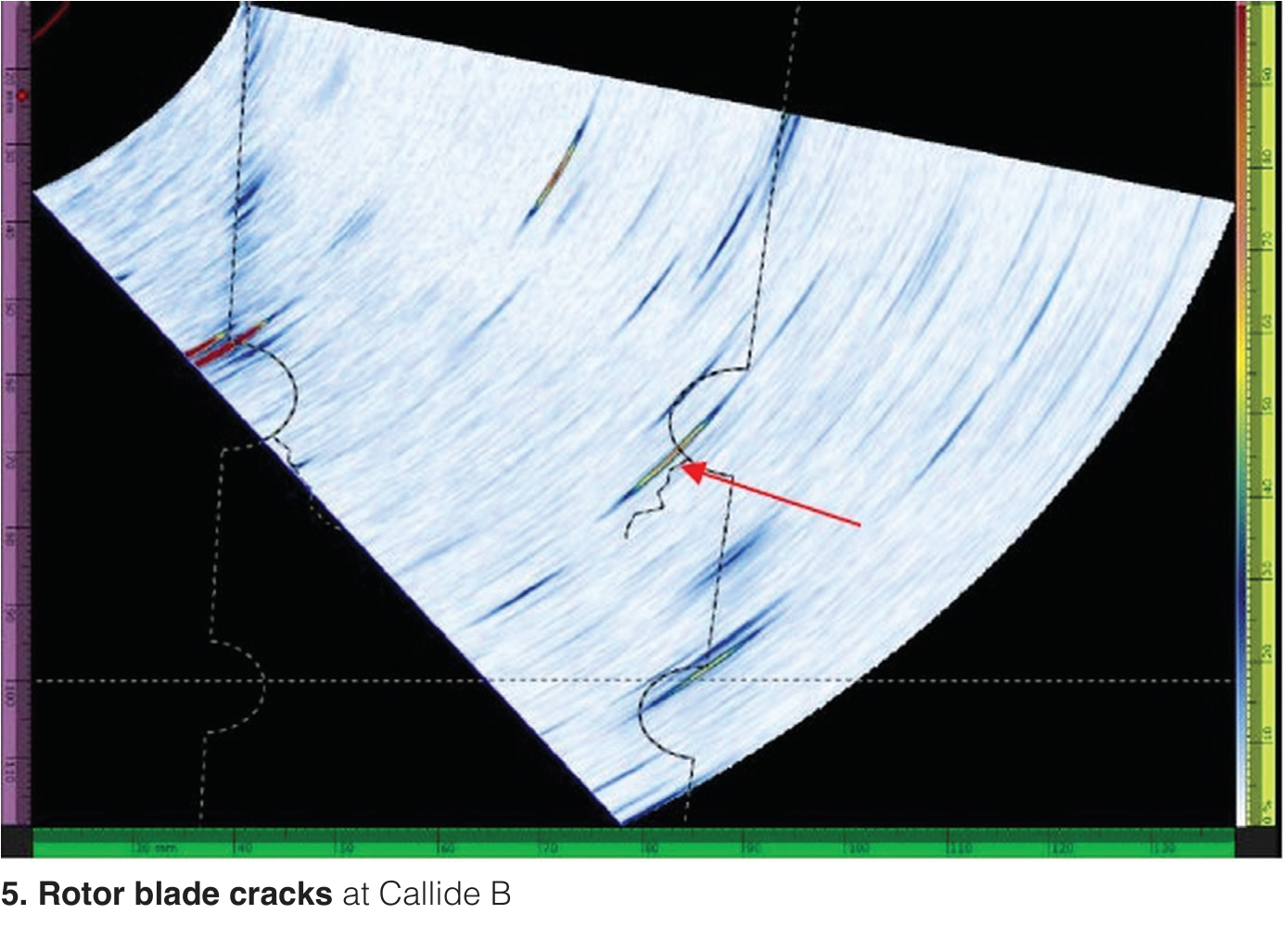
The primary mechanism was “non-synchronous vibrations at low load (2 to 200 MW) during startup and shutdown,” and this appeared in other CS Energy stations.
Visser reviewed critical crack length recommendations, inspection details and inspection intervals, followed by specific flow studies.
His conclusions for Callide B:
- Revise low-load restrictions down from 200 MW to 140 MW, in steps.
- Continue in-situ inspections at 12-month intervals.
- Install continuous cover blades (CCBs), “although this will not prevent ultra-low-load excitation and damage.”
Millmerran. David Ross and Aron Abolis, SRG Global, presented a case story on HP heater inspection and film-forming substance at the Millmerran Unit 1 425 MW supercritical coal unit in Queensland, commissioned in 2002. The unit operates at base load with minimal cycling.
In 2022, inspection revealed significant cracking in the feedwater heater. Cracking was visually identified in the feed nozzle to dished head welds. Fracture assessment in 2023 determined the existing defect sizes were marginal and additional operating data was obtained.
Data analysis continues as are management plans and schedules for replacement.
Bayswater. Matt Harris, AGL Energy, Australia, followed with AGL’s experience with film-forming substance: The ongoing data journey . His site was the 2640 MW coal-fired Bayswater Power Station in New South Wales.
Vales Point. Vales Point is a 1320 MW coal-fired station in New South Wales commissioned in in78-79 with two Toshiba 660 MW units. Aron Abolis, SRG Global, discussed a new software product, a Real-Time Damage Monitoring System that accounts for four different damage types simultaneously: primary creep rupture life, high-cycle damage fatigue, low-cycle damage fatigue, and coupled creep fatigue damage. Examples were discussed in detail.
Torrens Island B. Gordan Gray, AGL Energy, Australia, discussed A kaleidoscope of boiler activities at Torrens B. Torrens Island B currently operates three coal-fired Babcock & Wilcox boilers generating 600 MW. Gray covered blowdown system design changes, air preheater rotor issues, and secondary superheater outlet header creep.
Additional conventional plants were noted throughout ABHUG 2025.
Other case studies and technologies
NewGen Power Kwinana
Veronica Yeo gave an update on the NewGen Power Kwinana station located at a naval base in Western Australia. The station is a 335 MW combined cycle with 175 MW Alstom gas turbine, 160 MW steam turbine and Alstom HRSG commercial since 2008.
The update covered an economizer outlet lower manifold failure and replacement, duct burner failure and replacement, and HP reheater and economizer tube replacements, among others. Yeo then offered film-forming substance observations using ODA with a 1 ppm target. FFS dosing is directly into the feedwater tank from the top.
For the feedwater tank, water pooling at the bottom showed no signs of offline flash rusting after one week. However, uneven FFS coating was observed.
In the condenser hot well and steam space, hydrophobicity was observed in some areas but uneven coating was observed. HP and LP drum observations showed similar results.
Ultrasonics
Chris Jones, Quest Integrity, offered An update on advanced ultrasonic technology , first taking a deep dive into various aspects and examples of both conventional and newer technologies. His primary emphasis was in-service inspection of pressure parts.
Spray water leaking
Case studies of using clamp-on ultrasonic flow meters (Fig 6) to monitor for early signs of attemperator spray water leaking were also presented. Zelin Agnaev, Emerson Flexim (Germany), offered Cut maintenance costs; real-time monitoring of attemperator with clamp-on ultrasonic meters .
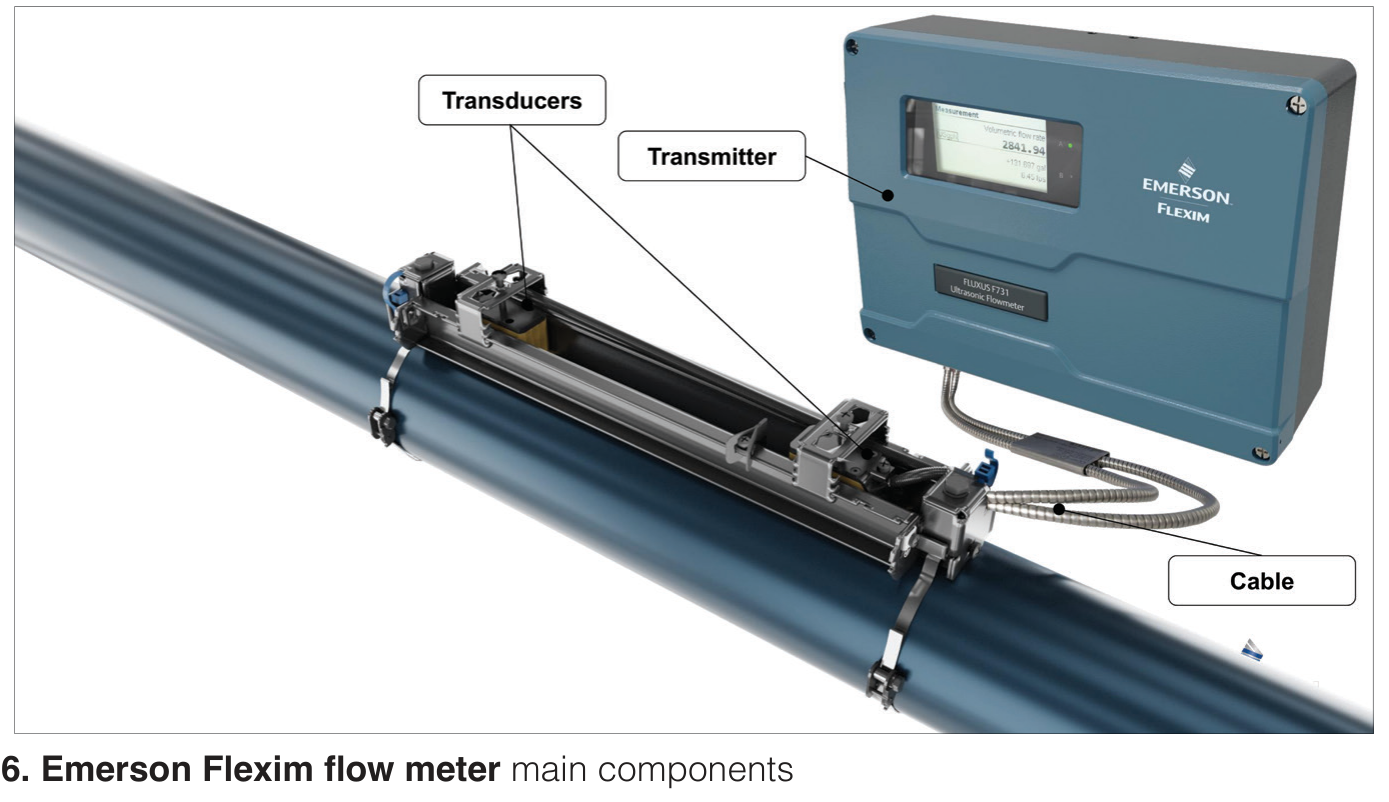
Spray water leaking is a leading cause of steam pipework and tube failures in HRSGs. Early leak detection is important so that block valve repairs can be scheduled before serious fatigue damage occurs.
The system presented features low-flow resolution down to 0.01 m/s, has no moving parts, and is a convenient retrofit without opening the pipe.
HP SH/RH drain control
A case study developed by EPRI, project managed by Competitive Power Resources, and supported by Flexim was reviewed. Anderson’s presentation: Full performance commissioning of automatic HPSH and RH control using ultrasonic technology .
This is the first successful commissioning of an automatic HP superheater/reheater drain control using ultrasonic technology on a new-construction F-class CCGT plant. The system functions by detecting when water versus steam is present in drain pipes, permitting all water to be removed prior to initiating steam flow while minimizing release of live steam.
As Anderson summarized, “This ultrasonic system facilitates draining of condensate during the purge to prevent its accumulation in HPSH/RH modules, expediting the startup while preventing damaging thermal transients associated with incomplete draining.”
Rounding it out
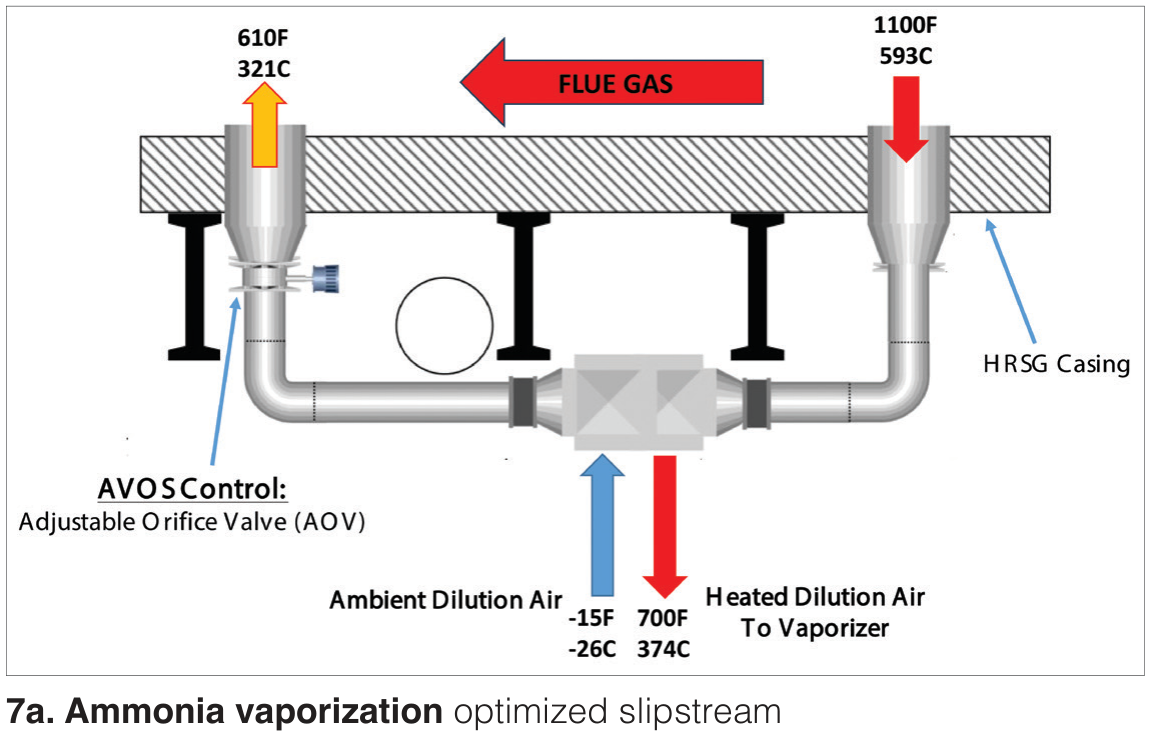
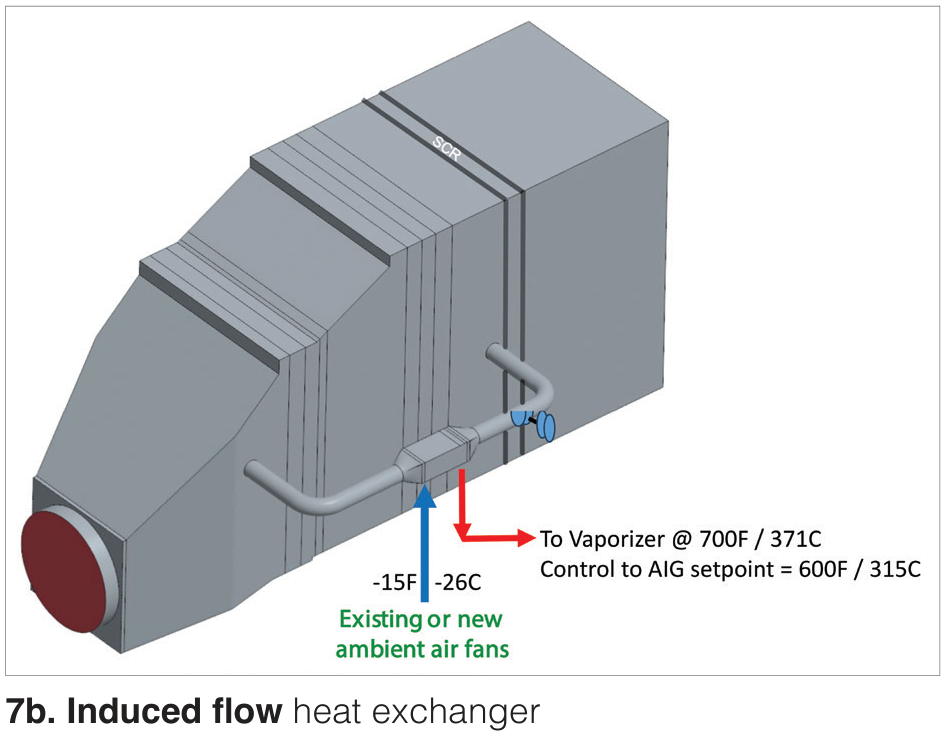
Matthew Smith, Thermic Systems, provided information on a new approach to duct burner design and an optimized SCR ammonia evaporation system. Smith presented the Gemini twin-manifold duct burner, an HRSG Intelligent Recirculation System (IRS), on-load shock-pulse boiler cleaning, and an ammonia vaporization system alternative to electric dilution air heater and hot flue gas fans. The solution presented is the Ammonia Vaporization Optimized Slipstream (AVOS) system using an Induced Flow Heat Exchanger (Fig 7).
David Addison, Thermal Chemistry, New Zealand, discussed key planning requirements for successful execution of HRSG chemical cleaning. In another cleaning presentation, Ray Esposito, Groome Industrial Service Group, took a deep dive into both finned tube and SCR/CO catalyst cleaning.
Additional presentations covered repair of deaerator and feedwater storage vessels (Steven Bond, Bond Engineering, Australia), stress-induced creep damage from an interference fit (Igor Markic, HRL, Australia), a detailed look at drum level imbalances (Aiman Yusri, HRL, Australia), computer modeling for enhanced reliability and efficiency (Paul Bosauder, Sequence Engineering, New Zealand), large-movement penetration seals with remote monitoring (Jake Waterhouse, Dekomte, UK), and HP economizer stress corrosion cracking at Diamantina Power Station (Ladislous Nyakuda, APA Australia). Diamantina is a 242 MW combined cycle facility in Queensland developed by APA Group and AGL Energy.
In addition, Barry Dooley covered The latest international activities on film-forming substances from seven International FFS Conferences . Information updates were also provided on the International, Australian and New Zealand Associations for the Properties of Water and Steam (IAPWS, AUSAPWS and NZAPWS).
Supplier presentations were offered by HRL Technology Group, Precision Iceblast Corporation, Swan Analytical, RTR Global, Flotech Controls, Duff & Macintosh, Laser Bond, Freudenberg Flow Technologies, HMA Instrumentation, and Thermic Systems.
2026
ABHUG 2026 is scheduled for November 25-27, 2026, at the Brisbane Convention and Exhibition Center. Information is now available at www.abhug.com. CCJ